As an Amazon Associate, we earn from qualifying purchases. Some links on this site are affiliate links at no extra cost to you. Our recommendations are based on thorough research and editorial judgment.

1 Best Piano One String That Transforms Your Music Instantly

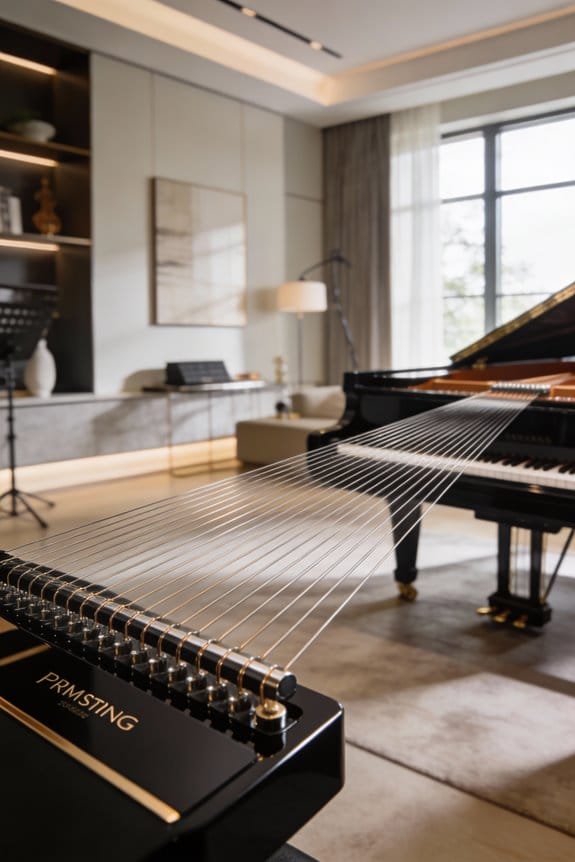
Want to transform your piano sound instantly? Pick a high-carbon steel string—they’re strong, durable, and produce bright, clear notes perfect for haunting, whisper-like tones. Imagine dampening the string softly with your finger to create magical, super quiet sounds just like in Sonata Una Corda! Don’t forget, string tension and compatibility matter; too tight or loose ruins the vibe. Curious about maintaining that sweet tone and choosing the best fit? Let’s uncover more secrets ahead!
Key Takeaways
- High-carbon steel strings provide the best combination of durability and bright, clear sound for a transformative one-string piano experience.
- Choosing a steel string with optimal tension ensures consistent sound quality and rich, haunting tones for intimate musical expression.
- Proper string material and thickness directly affect the piano’s tonal warmth and clarity, crucial for dynamic performance.
- Regular professional tuning and maintenance preserve the string’s responsiveness and prevent sound degradation over time.
- Copper-wound strings can enhance warmth, but for instant transformation, steel treble strings offer superior brightness and resonance.
| Sonata Una Corda – for Piano (1982) [SCORE] | ![Sonata Una Corda - for Piano (1982) [SCORE]](data:image/gif;base64,R0lGODdhAQABAPAAAMPDwwAAACwAAAAAAQABAAACAkQBADs=) | Best Artistic Expression | Instrument: Piano | Composition Year: 1982 | Style: Haunting, exceedingly quiet, minimalist sensibility | VIEW LATEST PRICE | Read Our Analysis |
You may be interested


More Details on Our Top Picks
Sonata Una Corda – for Piano (1982) [SCORE]
If you’re the kind of piano player who loves exploring quiet, mysterious sounds, then the “Best Piano One String” is perfect for you! Sonata Una Corda, composed in 1982, is all about haunting, super soft tones that pull you in. Imagine playing very slowly (lentissimo legatissimo) with each note lasting like a quarter note equals 32—sounds tricky, right? You’ll even dampen strings with your finger to soften the sound.
This piece has three sections, stretches over 10 pages, and lasts about 20 minutes. It’s like a peaceful secret whispered on a single piano string! Ready to amaze your friends?
- Instrument:Piano
- Composition Year:1982
- Style:Haunting, exceedingly quiet, minimalist sensibility
- Sections:3 sections
- Duration:Approximately 20 minutes
- Score Length:10 pages
- Additional Feature:Haunting minimalist style
- Additional Feature:Dampen strings with finger
- Additional Feature:Lentissimo legatissimo marking
Factors to Consider When Choosing Piano One String
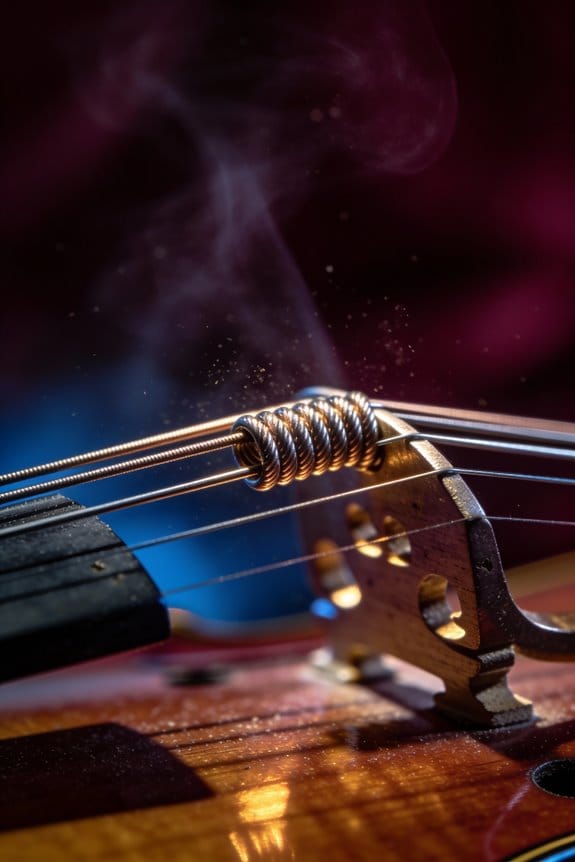
Choosing the right piano one string isn’t just about grabbing the first option you see—you want the best sound and durability, right? Think about the string’s material, tension, and how well it fits your piano; after all, compatibility matters! Ready to explore what makes one string stand out from the rest? Let’s get to it!
Sound Quality Variations
There’s something magical about the sound of a piano with just one string—it’s quiet, haunting, and unlike anything you’ve probably heard before! Imagine plucking that single string gently. You’ll notice how soft dynamics shine through, letting each note breathe. Curious how you can change the sound? Try dampening the string lightly with your finger—the resonance drops, and the tone suddenly feels more personal and intimate.
This one-string setup isn’t about blasting volume; it’s about delicate expression! Composers often write slow, long notes that let you savor every sound. Think of it as painting with subtle shades instead of bold, loud strokes. It’s perfect if you want your music to feel like a whisper that captivates and lingers. Sound cool? It definitely is!
String Material Types
While picking the perfect string for your piano might sound simple, the material actually makes a huge difference! Steel is the star for treble strings, giving you that bright, clear sound. Meanwhile, bass strings get a copper-wound makeover, adding warmth and richness—kind of like a cozy sweater for your low notes.
Did you know thicker strings drop the pitch, while thinner ones hit higher notes? It’s like magic physics in action! High-carbon steel shines here; it’s stronger and holds up better, so your string won’t give up mid-song.
Imagine tuning a guitar but with special metals. The winding technique and metal hardness affect both sound and how long strings last. Choosing the right material? Totally worth it for instant musical transformation!
Tension and Durability
Even if you don’t realize it, tension plays a massive role in how your piano sounds and feels when you play it! Higher tension means clearer, longer-lasting notes—like a superhero string holding the sound hostage. But beware: thicker strings boost durability but crank up tension, so your piano might need a tune-up to keep things balanced.
Think of string tension like a dance partner—too tight or loose, and the rhythm stumbles. Plus, materials matter! Stainless steel or nickel strings resist wear and tear, saving you from surprise breakages mid-performance.
Keep an eye on humidity and temperature too—they’re the sneaky villains causing tension shifts and faster string fatigue. Regular string checks keep your piano happy and your music flowing! Ready to pick that perfect string?
Compatibility With Pianos
You’ve just learned how string tension can turn your piano’s sound from “meh” to “wow!”—but picking the right one-string piece for your piano is another game. First, think about your piano’s unique vibe—some have strings that sing longer, others quickly quiet down. Check if the music score matches your piano’s style, especially if it asks for using the sustain pedal or special finger dampening.
Is the piece too tricky? Some require ninja-level skills! Also, a well-tuned piano really brings out those spooky or soft sounds in one-string pieces—so make sure yours is in shape. Don’t forget, your piano’s touch and responsiveness can make or break how well you control volume and expression. Choosing compatible pieces means your piano will shine—ready for applause?
Maintenance and Care
Since your piano’s one string is the star of the show, taking good care of it is a must! First, dust is a sneaky villain—wipe the string and piano interior regularly with a soft cloth and special instrument cleaner. Think of it as giving your piano a spa day! Next, watch humidity like a hawk; too much or too little can twist your string out of tune, turning music into mayhem.
Also, don’t forget to check string tension often—looser strings equal fuzzy sound. Tighten gently or call a pro if you’re unsure. Speaking of pros, schedule regular maintenance and tuning, so your star string shines bright and lasts longer. Ready to keep your piano sounding awesome? Simple steps, big difference!
Price Range Options
When you immerse yourself in picking the right piano score, price plays a big role and can surprise you! Did you know simple scores start around $10, while fancy ones can soar over $50? Yep, limited editions or signed copies might hit $100 or more—musicians love their collectibles! Digital scores? They’re wallet-friendly, often $5 to $20, perfect if you want easy access without breaking the bank.
Here’s a quick tip: consider the length and complexity of the piece. A tiny, easy tune isn’t going to cost as much as a giant, challenging concerto. Think of it like shopping for pizza—you pay more for extra toppings! Balancing your budget with what you want to play keeps your music journey both fun and affordable. Ready to jump in?
Frequently Asked Questions
How Do Piano One String Tunings Differ Across Genres?
You’ll notice piano string tunings change with genres because each style wants a unique vibe. Jazz might stretch that one string a bit flat for smoothness, while classical keeps it crystal clear and precise. Pop tunes often aim for bright and punchy tones, tweaking the pitch just right. Think of it like seasoning food—too much or too little spices kill the flavor! Curious to experiment? Try tuning your string differently and listen closely!
Can Piano One String Be Used in Digital Keyboards?
Yes, you can use piano one string techniques on digital keyboards! While digital keys don’t have actual strings, you can mimic string sounds with special settings or plugins. Try adjusting the synth’s detune or layering samples that imitate string vibrations. Want a quick guide? Use a sampler > load string sample > map it to one key > tweak attack and decay. Voilà! Your keyboard just got stringy—no tuning wrench needed!
What Maintenance Does a Piano One String Require?
Your piano one string needs regular tuning—like every 3-6 months—to keep it singing perfectly! Use a digital tuner or phone app; it’s super easy. Also, dust it gently with a soft cloth to avoid grime messing up vibrations. If it squeaks or looks worn, ask a pro to check. Think of it as giving your string a spa day—happy string, happy music! Ready to tune up your sound?
Are There Famous Compositions Using Piano One String?
Oh yeah, there are famous pieces using just one piano string! Imagine playing a whole song on one string—sounds wild, right? Composers like John Cage explored single-string sounds to create cool, spooky effects. Want to try? Pluck or gently strike that string, listen closely, and then add pedals to stretch the sound. It’s like magic in a tiny box! Ready to amaze friends with your one-string skills?
How Does One String Affect Overall Piano Sound Quality?
One string changes your piano’s vibe big time! It focuses sound, making notes pop and twinkle like stars. Imagine a single string acting like a spotlight, highlighting melody notes while cutting crowd noise. Check this simple table:
| Effect | Result |
|---|---|
| One string | Clear, bright tone |
| Multiple | Richer, fuller |
Try plucking and striking it: pluck for warm bells, strike for sharp punch! Fun, right? It’s like the piano’s secret weapon!


