As an Amazon Associate, we earn from qualifying purchases. Some links on this site are affiliate links at no extra cost to you. Our recommendations are based on thorough research and editorial judgment.


5 Best Bass Guitar Neck Angles to Enhance Your Playing Experience

Choosing the right bass guitar neck angle can totally transform your playing! Whether you’re jamming hard or letting the groove flow, angles between 0.25 to 1 degree are crucial. They affect everything from action height to tonal quality—and nobody wants fret buzz ruining their vibe, right? Aim for a gentle 0.25-degree shim for minor tweaks or go bold with 1 degree for a major shift. Curious how the right shims can take your sound to the next level?
Key Takeaways
- A neck angle of 0.25 degrees offers subtle adjustments, enhancing playability without significant changes to action height.
- A 0.5-degree neck angle strikes a balance, improving tone while maintaining comfort and reducing fret buzz.
- For aggressive playing styles, a 1-degree neck angle allows for higher action, promoting sustain and greater string vibration.
- Using quality maple neck shims retains tonal clarity and improves resonance for a better overall sound experience.
- Regular neck relief checks ensure optimal performance, preventing intonation issues and unwanted string noise.
| Piutouyar Guitar Neck Shims 3-Pack for Repair | 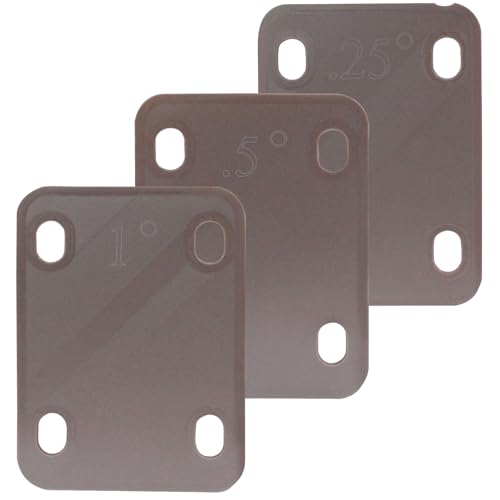 | Best for Durability | Material: Flexible nylon plastic | Angle Options: 0.25°, 0.5°, 1° | Dimensions: 76 x 56mm (3 x 2.2 inches) | VIEW LATEST PRICE | Read Our Analysis |
| Banworks Guitar Neck Shims (Pack of 3) | 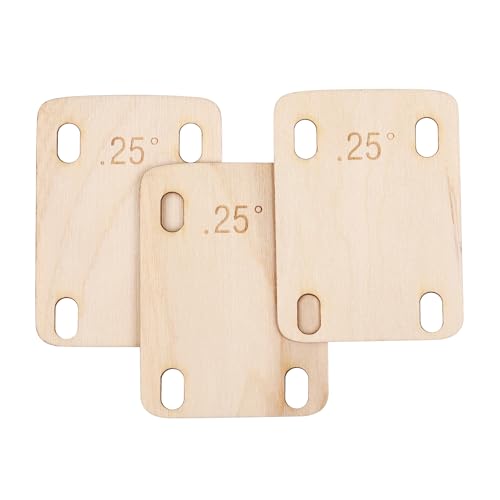 | Precision Adjustments | Material: Maple wood | Angle Options: 0.25° | Dimensions: 56 x 76mm (2.205 x 2.992 inches) | VIEW LATEST PRICE | Read Our Analysis |
| 3pcs Maple Guitar Neck Shims for Neck Repair | 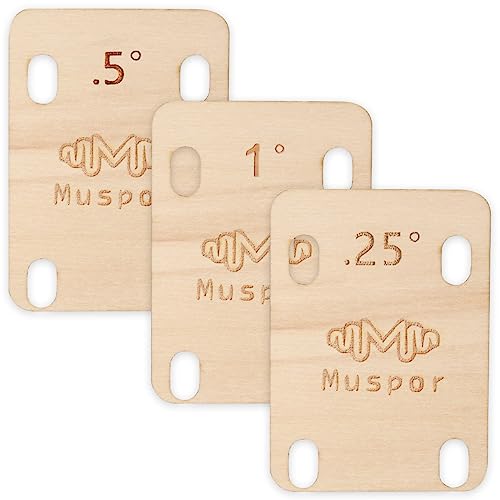 | Superior Sound Quality | Material: Solid maple wood | Angle Options: 0.25°, 0.5°, 1° | Dimensions: Not specified, but typically similar | VIEW LATEST PRICE | Read Our Analysis |
| StewMac Bass Neck Shims Set of 3 | 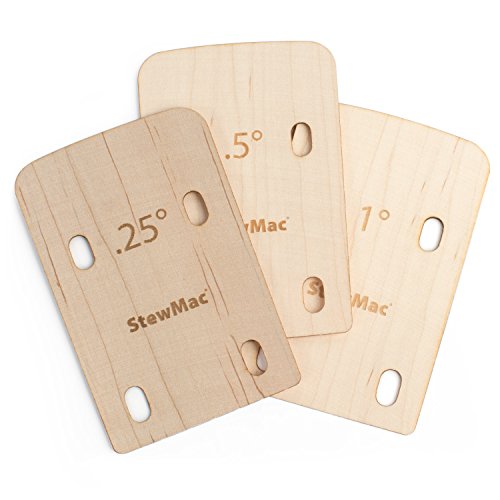 | Professional Grade | Material: Solid maple | Angle Options: 0.25°, 0.5°, 1° | Dimensions: Not specified, but typically similar | VIEW LATEST PRICE | Read Our Analysis |
| 3pcs Maple Wood Guitar Neck Shims for Repair |  | Flexible Restoration Tool | Material: Solid maple wood | Angle Options: 0.25°, 0.5°, 1° | Dimensions: 55 x 75mm (2.17 x 2.95 inches) | VIEW LATEST PRICE | Read Our Analysis |
You may be interested

More Details on Our Top Picks
Piutouyar Guitar Neck Shims 3-Pack for Repair
Are you tired of struggling with a bass guitar that just doesn’t feel right? You’re not alone! The Piutouyar Guitar Neck Shims 3-Pack could be your game-changer!
This handy set includes shims with 0.25-degree, 0.5-degree, and 1-degree angles. Just imagine the perfect neck adjustments to enhance your bass guitar’s playability. Each shim measures 76 x 56mm (3 x 2.2 inches), making them compatible with most instruments.
Made from flexible nylon plastic, these little wonders are built to last! They can reduce wear and help your instrument stay in tip-top shape. Don’t let a misaligned neck ruin your groove! 🎸
- Material:Flexible nylon plastic
- Angle Options:0.25°, 0.5°, 1°
- Dimensions:76 x 56mm (3 x 2.2 inches)
- Quantity:Pack of 3
- Installation Ease:Easy installation
- Functionality:Adjusts neck angle for better playability
- Additional Feature:Flexible nylon plastic
- Additional Feature:Long-lasting performance
- Additional Feature:Essential for maintenance
Recommended Products

Enhanced Resonance: Crafted from solid maple, these guitar neck shims are designed to improve the resonance of your guitar neck.
Used to change the angle of a bolt-on guitar neck, protecting your guitar’s neck and base from wear and damage.
HIGH QUALITY MATERIAL:Guitar neck shims are made of high quality solid brass material for durable use to match the guitar neck.
Banworks Guitar Neck Shims (Pack of 3)
If you’re looking to fine-tune your guitar’s neck angle, the Banworks Guitar Neck Shims are just what you need! These handy little shims come in a pack of three, offering a 0.25-degree angle to help you nail that perfect setup.
Crafted from maple wood, they’re sturdy and reliable. Plus, they fit Telecaster and Stratocaster 4-bolt neck pockets like a glove! Need more angle? Just stack ’em up!
Before you order, double-check your dimensions—no one likes a shim that doesn’t fit! With easy installation, you’ll enhance string vibration and get that sweet sound you crave! Ready to rock?
- Material:Maple wood
- Angle Options:0.25°
- Dimensions:56 x 76mm (2.205 x 2.992 inches)
- Quantity:Pack of 3
- Installation Ease:Requires size verification
- Functionality:Can stack for desired adjustments
- Additional Feature:Designed for Telecaster/Stratocaster
- Additional Feature:Uniform contact surface
- Additional Feature:Stackable shims option
Recommended Products
【Tapered Maple Shims】Designed for the angle of a bolt-on neck, these tapered maple shims provide precise alignment for your electric bass.
1.🎄Guitar Neck Shim: To change the angle of a bolt-on guitar neck.🎄🎄🎄🎄🎄🎄🎄🎄Please note:all the TOSICAM shims are taper in our store,before you pay ,please see clearly it is Pro-PCB store.🎄🎄🎄🎄🎄🎄🎄
Package Content: You will receive 3 pieces of guitar neck shims, which are made of solid maple wood and have more resonance and stability than plastic, helping you preserve the natural sound of your guitar or bass.
3pcs Maple Guitar Neck Shims for Neck Repair
Looking for a way to fix that pesky neck angle on your bass guitar? The 3pcs Maple Guitar Neck Shims might just be your new best friends! Made from solid maple, these shims come in 0.25, 0.5, and 1-degree angles—perfect for whatever your guitar needs.
They’re built to last! Unlike plastic shims, maple’s strength gives you better sound and stability. Plus, with rounded corners, your hands won’t get scratched while you’re fine-tuning your setup—ouch!
You can even customize them! Just cut or sand for the perfect fit. Let’s get your bass in top shape! 🎸
- Material:Solid maple wood
- Angle Options:0.25°, 0.5°, 1°
- Dimensions:Not specified, but typically similar
- Quantity:3pcs
- Installation Ease:Smooth design for ease of use
- Functionality:Allows precise tilting of instruments
- Additional Feature:Rounded corners design
- Additional Feature:Smooth, burr-free finish
- Additional Feature:Customizable through sanding
Recommended Products
【Quality Material】Crafted from durable solid maple wood materials, not easy to break and corrode, these guitar neck shims are made to last and withstand the demands of regular use. and have more resonance and stability than plastic, helping you preserve the natural sound of your guitar or bass.
HIGH QUALITY REPLACEMENT: These maple headplates provide continued face protection for folk/classic guitars, ideal for restoring worn instruments. Each set includes precision-cut wood veneer pieces measuring 203x93x2 mm/7.99x3.66x0.08in
SET OF 3 PRECISION SHIMS: Includes 0.25°, 0.50°, and 1.00° shims to achieve the perfect neck angle for any bolt-on guitar
StewMac Bass Neck Shims Set of 3
For bass players looking to perfectly adjust their instrument’s neck, the StewMac Bass Neck Shims Set of 3 is a game-changer! These solid maple shims come in a set of three, each with different tapers: 0.25 degrees, 0.5 degrees, and 1 degree.
Why bother with homemade shims? They often leave gaps, and we don’t want a rickety neck, do we? Just slip one of these shims under your bolt-on neck, and you’ll get a snug fit! They’re essential for quick repairs and ultimate comfort while playing. Trust me, your bass and fingers will thank you!
- Material:Solid maple
- Angle Options:0.25°, 0.5°, 1°
- Dimensions:Not specified, but typically similar
- Quantity:Set of 3
- Installation Ease:Easy for quick repairs
- Functionality:Changes neck angle for proper fit
- Additional Feature:Prevents unwanted gaps
- Additional Feature:Superior to homemade options
- Additional Feature:Quick repair availability
Recommended Products
13Pcs Guitar neck plate gasket set: includes 10pcs brass shims and 3pcsnylon gaskets. The brass gasket has three thickness sizes, namely 0.2mm (4 pieces), 0.5mm (4 pieces), and 1mm (2 pieces); Nylon neck shims have three taper sizes, namely 0.25 degree taper, 0.5 degree taper, and 1 degree taper.
Used to change the angle of a bolt-on bass neck

Material: Guitar neck shims are made of high quality solid brass for strong, durable, not easy to fade, long service life.
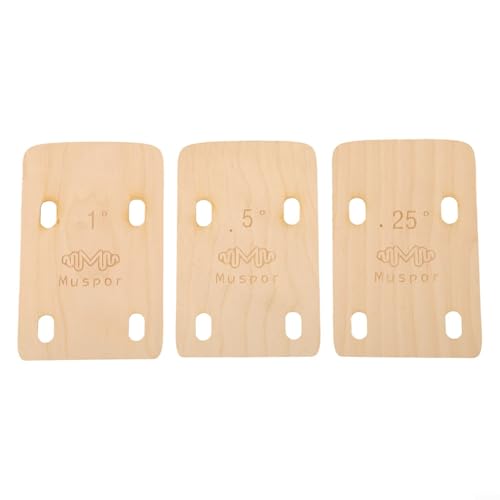
3pcs Maple Wood Guitar Neck Shims for Repair
When you’re diving into the world of bass guitar repairs, having the right tools can make all the difference! Introducing the 3pcs Maple Wood Guitar Neck Shims—a game changer in your repair toolkit!
These solid maple shims resonate beautifully, letting your bass’s natural sound shine. They come in angles of 0.25, 0.5, and 1 degree, so you can truly customize your instrument.
Installation is a breeze. Just secure them to the neck with bolts, preventing air pockets and protecting your bass from wear. Plus, you can easily cut or sand them for that perfect fit! Who knew fixing a bass could be this fun? 🎸
- Material:Solid maple wood
- Angle Options:0.25°, 0.5°, 1°
- Dimensions:55 x 75mm (2.17 x 2.95 inches)
- Quantity:3pcs
- Installation Ease:Easy to install
- Functionality:Alters neck angle secured by bolts
- Additional Feature:Better sound resonance
- Additional Feature:Flexible construction options
- Additional Feature:Streamlined repair process




Recommended Products

Used to change the angle of a bolt-on guitar neck

3PCS: Including 3pcs electric guitar neck gaskets, easy to install and use, providing additional options and flexibility for guitar maintenance and adjustment

Used to change the angle of a bolt-on guitar neck
Factors to Consider When Choosing a Bass Guitar Neck Angle

When you’re picking a bass guitar neck angle, there are a few key factors you can’t ignore! From the right neck relief adjustment to action height and taper options, each element plays a vital role in how your bass feels and sounds. Plus, don’t forget about the material quality and how easy it is to install—after all, you want your setup to be as smooth as your bass lines!
Neck Relief Adjustment
Neck relief adjustment is one of those magical tricks every bassist should know, because it makes a world of difference in how your instrument plays! You want your strings to vibrate freely, right? A slight bowing of the neck, usually between 0.25mm to 0.5mm at the 8th fret, is just the ticket to avoid nasty fret buzz!
If your neck’s too flat, watch out for dead notes! On the flip side, too much relief can mess with playability. Remember, those seasonal changes can shift your neck relief, so checking it regularly helps. Need a quick fix? Neck shims can work wonders to relieve tension on those strings—just like stretching before a game! With a little adjustment, you’ll sound fantastic!
Action Height Consideration
Finding the perfect action height for your bass guitar can feel like hunting for buried treasure! The action height, or the distance between the strings and the fretboard, can totally change your playing experience. If you prefer an aggressive style, a higher neck angle might suit you. Just remember, too high can invite fret buzz—yikes!
On the flip side, a lower neck angle could boost playability. But be careful! If it’s too low, string noise might crash your groove.
The secret? Setting the neck angle just right enhances string vibration and tone production! You can use shims to adjust the neck angle and lock in that sweet action height. Ready to find your treasure? Let’s get started!
Taper Angle Options
Adjusting your bass guitar’s neck angle isn’t just about what looks cool; it’s all about those sweet sounds you want to create! Have you considered taper angles? They’re key!
Most shims range from 0.25 to 1 degree. A 0.25-degree shim is great for small tweaks—think of it as a gentle nudge. On the other hand, a 1-degree shim? That’s like giving your bass a full makeover!
Don’t shy away from stacking shims to get it just right! With careful stacking, you can achieve the perfect height for smooth string action. This means your instrument plays like a dream! So, before you adjust, remember: the right taper angle can make all the difference. Happy playing!
Material Quality Impact
When you’re diving into the world of bass guitar neck angles, one thing’s for sure: the material of your shims really matters! Think about it—solid wood shims offer fantastic tonal clarity. Who wouldn’t want that?
Using materials like maple means your shims are tough and last longer. They resist breakage, making them reliable for your jams! Plus, quality materials improve neck-to-body contact. Fewer gaps mean better sound and more precise adjustments—no awkward bumps while you play!
Wood shims have that sweet versatility, too; you can sand or cut them for a perfect fit. So, why settle for flimsy plastic? Invest in good shims! Your bass tone deserves it. You’ll thank yourself when your music really shines!
Installability and Flexibility
Choosing the right angle for your bass guitar neck isn’t just about style—it’s about making sure your instrument really sings! Think about installability; you want your neck shim to fit snugly. If it’s wobbly, your music might sound wobbly too!
Flexibility is key. Some shims let you customize the fit through cutting or sanding. Imagine having a perfect tailor for your bass!
Look for quality materials. Solid maple shims provide great resonance and are easier to install. Plus, accurate tapering options, like 0.5 degrees, mean less trial and error.
And hey, nobody enjoys long repairs, right? Quality neck shims are designed for quick adjustments, so you can get back to rocking in no time! 🎸
Instrument Playability Improvement
Finding the perfect neck angle for your bass guitar is like revealing a secret level in a video game—it can change everything! By adjusting the neck angle, you can improve string action and kick unwanted fret buzz to the curb!
A well-aligned neck lets your strings sit just right over the frets, making finger positioning a breeze. Ever struggled with tuning? An incorrect neck angle can make your strings wear out faster and mess with tuning stability.
With the right angle, your bass will sing in tune all over the fretboard. Plus, using sturdy shims boosts resonance and sustain! So, set your bass guitar angle right, and release its full playability potential—time to rock on!
Frequently Asked Questions
How Do Different Neck Angles Affect String Action?
Different neck angles can totally change your string action! A flatter angle usually means lower action, which makes playing easier and faster—perfect for those funky grooves! On the flip side, a steeper angle can raise the action, giving you a punchier sound, but watch out for sore fingers! It’s like finding the right pizza—everyone’s got their favorite! Just remember, balance is key! So, experiment and discover what feels best for your playing style!
Can a Wrong Neck Angle Cause Fret Buzz?
A wrong neck angle can definitely cause fret buzz. When the neck’s too flat or angled incorrectly, the strings can hit the frets hard enough to make a buzzing sound. Imagine trying to play a cool riff, and all you hear is a “bzzz!” Not fun, right? Adjusting the neck angle can usually fix that! Just remember, a tiny tweak can make a huge difference in your sound—so get to adjusting!
What Tools Are Needed for Adjusting Neck Angles?
To adjust neck angles, you’ll need a few handy tools! Grab a tuner to check your intonation, a truss rod wrench for neck adjustments, and maybe a screw or Allen key set for bridge modifications. A capo’s great too! It’s like a superhero for checking fret buzz! Don’t forget a ruler for accurate action height measurements. With these tools in hand, you’re ready to rock that bass! Let’s get to it!
Is It Common for Neck Angles to Change Over Time?
Neck angles can change over time, especially with humidity and string tension. It’s like your bass guitar is going through growing pains. If you notice buzzing or awkward action, it’s time to investigate! Regular checks can save you headaches later, trust me. Just think of it as giving your bass a little TLC! So, keep an eye on that neck—your grooves and jams depend on it! Rock on!
How Can I Tell if My Neck Angle Is Off?
You can tell if your neck angle’s off by checking for buzzes or dead spots while you play. If your bass strings rattle against the frets, it’s likely a sign! Another hint? Look at the distance between the strings and fretboard. If it’s super low or way too high, something’s up. Also, check if you need to twist your wrist awkwardly when playing. If you do, don’t fret! Adjusting the neck can fix it!


