As an Amazon Associate, we earn from qualifying purchases. Some links on this site are affiliate links at no extra cost to you. Our recommendations are based on thorough research and editorial judgment.


How to Break Down Difficult Piano Passages

Struggling with difficult piano passages? You’re not alone! Whether you’re a beginner or an experienced player, breaking down challenging sections can transform your practice sessions into a more enjoyable experience.
You may be interested


In this guide, you’ll learn effective techniques for isolating tricky measures, using a metronome to establish a steady rhythm, and incorporating varied rhythms to keep the process engaging.
Plus, we’ll delve into the importance of connecting emotionally with the music, which adds depth to your playing.
Stick with us, and you’ll gain valuable insights that will help you conquer those formidable piano passages like a pro!
Key Takeaways
- Isolate challenging measures, practicing one at a time for clarity and comfort with notes.
- Practice slowly to develop muscle memory, gradually increasing tempo as proficiency improves.
- Break complex sections into smaller bits for focused repetition and mastery.
- Regularly revisit tricky measures to identify and correct mistakes for clean playing.
- Take breaks to return with fresh perspective, enhancing your ability to tackle difficult passages.
Analyzing Problematic Sections

When you run into a tricky piano passage, the first step is to really break down those challenging sections. Analyzing the problematic areas in your sheet music can truly change the way you play! Pick out specific measures that give you trouble, and take the time to practice them slowly. Think of it like learning to walk before you run; it’s about getting your fingers comfortable with the notes.
A metronome can be your best friend here. It helps you maintain a steady rhythm and keeps your playing honest! Try breaking down the rhythmic patterns. For example, you could experiment with playing dotted-quaver and semi-quaver groupings to make the rhythm more fun while also improving your evenness. This keeps your practice exciting and effective.
Don’t forget about the emotional side of music! It’s important to connect with the intent behind the notes. After working on those tricky parts, take a break and come back with fresh eyes—and fingers. You might find that those challenging sections become much easier to execute. So, get ready to embrace your piano journey, and let’s see what comes next!
Incorporating visual learning aids such as color-coded keyboard stickers can make identifying notes in difficult passages more intuitive and enhance overall practice efficiency.
Recommended Products

Rainbow Color Piano Stickers: To make learning even more enjoyable, our piano book comes with vibrant rainbow-colored piano stickers. These stickers serve as helpful visual aids for learning notes and keys.

🎹 Color-Coded Note Reference Each piano note is printed in a distinct color for easy visual identification during practice and reference.

Isolating Difficult Measures

Isolating difficult measures can really transform your practice when it comes to mastering those tricky piano pieces! Think about it like tackling a big puzzle—focusing on one piece at a time makes it so much more manageable. Instead of getting lost in the complexity of the whole piece, you can zoom in on those challenging sections and give them the attention they deserve.
When you’re practicing, try slowing down your tempo to around 30 beats per minute. It might feel excruciatingly slow, almost like you’re moving through syrup, but this is where the magic happens. By going at this pace, you’re setting yourself up for success with proper muscle memory. For example, if you’re struggling with a complex passage, break it into even smaller bits and repeat it slowly until you can play it smoothly.
And here’s a tip: regularly revisit these tricky measures, just like you’d polish a piece of jewelry to find those hidden imperfections. This helps you spot mistakes more easily, making your playing cleaner and more confident over time. So, as you work through your pieces, remember: focus on those challenging sections one at a time, and you’ll see improvement before you know it! Ready to tackle those problem spots? Let’s get to it!
Using specialized piano voicing tools can also enhance your practice by allowing you to fine-tune the subtle sound qualities of your instrument, making it easier to hear and perfect those difficult passages.
Recommended Products
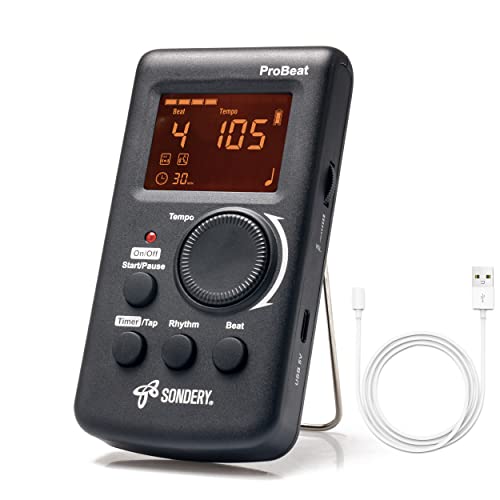
Direct and fast setting of beat, tempo, rhythm by buttons and knobs. Easily reading color screen helps a lot to understand what you want out of your Sondery brand ProBeat digital metronome.

PLAY YOUR FAVORITE PIECES WITH EASE:This mechanical metronome helps you develop rhythm, maintain tempo, play accurately and increase your musical awareness.

SATISFACTION GUARANTEE:30-day unconditional returns and 1-year manufacturer product warranty
Employing Varied Rhythmic Patterns

When you’re trying to master those tricky piano passages, it’s not just about isolating the difficult measures. Trust me, employing varied rhythmic patterns is a game-changer! For instance, using dotted-quaver and semi-quaver patterns creates a lively rhythm that really helps with evenness. And who doesn’t want their music to feel smooth and flowing?
To keep your practice sessions engaging, try mixing up your rhythms! One fun strategy is alternating between semi-quaver and dotted-quaver groupings. This keeps things fresh and prevents that dreaded boredom while you focus on the intricate details. Think of it as adding some spice to your practice stew—nobody wants bland practice!
Another great tip is to adjust your overall tempo. Start slow, maybe at 30 beats per minute, and then gradually speed up as you get comfortable. This method makes tackling complex rhythms much easier. Plus, rhythmic improvisation techniques—like adding different accents—can give you mental signposts that help with memorization. It’s almost like having a secret map for when you perform!
Also, capturing your practice using condenser microphone technology can help you analyze your playing more critically and track your progress over time.
With these ideas, you’ll find that mastering tricky passages becomes a lot more enjoyable. Now, let’s explore some techniques to develop your musical expression even further!
Recommended Products

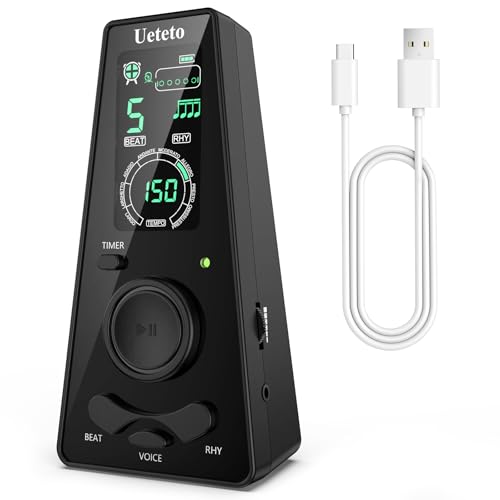
🎵[Modern and Classic Design] : SDREAM Digital Metronome with LCD display makes practice much easier.This Electronic metronome retains the classic pyramid-shaped design while incorporating elements of modern style. It not only inherits the classic appearance but also improves its precision and ease of use. Moreover, they are durable.


FAST TEMPO CONTROL: Quickly adjust tempo with the smooth rotary knob and use the center button to pause or resume. Designed for beginners and professional musicians, this portable digital metronome makes rhythm practice easier and more efficient than traditional mechanical or basic button-only models.
Utilizing a Metronome for Accuracy
You know, a metronome is like that reliable friend you turn to when you’re trying to master those tricky piano pieces! It really helps with practice consistency. If you start off at a slower tempo, say around 30 bpm, you can zero in on hitting each note accurately before you speed things up. It’s super satisfying to finally play those challenging sections without a hitch!
When you hit a rough patch, just slow down the metronome. This way, you can reinforce your good habits and make those tough bits a lot easier. Plus, switching up the rhythms can actually make practice feel lighter and more enjoyable. Picture yourself playing each note perfectly in sync—it’s quite the accomplishment!
Regularly using a metronome also preps you for when it’s time to perform. You’ll notice how much stronger your rhythmic foundation becomes over time! So, why not set your metronome and see how it can enhance your practice? It’s a small step that can lead to big improvements in your skills. Supporting your practice with the right tools like piano pedal extenders can also enhance your comfort and technique during long sessions.
Recommended Products

Enhanced Design Upgrade – The SQ-50-V improves on the classic SQ50 with a sleek new look, upgraded interface, and even easier operation for musicians of all levels.
𝐃𝐢𝐠𝐢𝐭𝐚𝐥 𝐌𝐞𝐭𝐫𝐨𝐧𝐨𝐦𝐞 𝐎𝐧𝐥𝐲:This metronome for piano features a clear LCD display, flashing light, 9 rhythm patterns, 10 beats (0,1,2,3,4,5,6,7, 8,9), 40–208 BPM, volume control, and timer options for 15, 30, 45, or 60 minutes. Electronic metronome is ideal for Piano, Guitar, Drums, Ukulele, Harmonica, Saxophone, Bass, Violin, Cello, Banjo, flute, Chromatic, Trumpet, and other instruments. The screen saves power by turning off after 30 seconds and wakes instantly with any button press. (𝐍𝐨𝐭𝐞: 𝐍𝐨 𝐭𝐮𝐧𝐞𝐫 𝐟𝐮𝐧𝐜𝐭𝐢𝐨𝐧)

Gradual Speed Increase
Hey there! So, you’ve got the metronome set up and you’ve found your steady groove—that’s fantastic! Now, let’s chat about how to gradually increase your speed on those tricky piano passages. Picture this: you start off at a super relaxed pace, like just 30 beats per minute. This slow practice gives you a chance to nail down the notes accurately, helping your fingers get used to the motions without any pressure.
Once you’re confidently playing at that slow pace and hitting about 90% accuracy, it’s time to ramp things up a bit. Adjust that metronome and raise the tempo, but here’s the trick—play through that same passage 3 to 5 times at each speed. It’s almost like leveling up in your favorite video game; each new speed is your next challenge!
Just remember to keep those tempo jumps small. If you’re moving from 60 BPM to 70 BPM, don’t rush it! Take your time, and before you know it, you’ll be breezing through those segments like it’s second nature. By building that speed gradually, you’ll strengthen your confidence and skill. Ready to tackle the next part? Let’s explore some fun techniques to keep your practice fresh and engaging! 🎹 To further enhance your progress, consider using a digital piano with graded hammer action keys that simulate the feel of an acoustic piano for better finger control.
Recommended Products

🎹 【Full-Weighted 88 key keyboard】The digital electric piano is constructed by 88 full-sized hammer action keys with adjustable touch response. This 88-key weighted keyboard allows to adjust your desired playing style.

The Ultimate Practice Keyboard for Beginners - Portable, lightweight, and easy-to-use music keyboard with built-in speakers delivering rich sound for an authentic and inspiring playing experience

Acoustic Piano Feel - Touch-sensitive keys allow for true expression and dynamic performance. The weighted action replicates the acoustic piano experience
Maintaining Musical Intent
Embracing musical intent is super important, especially when you’re tackling those tricky piano sections. Think of it like adding your special twist to a homemade dish—it’s the flavor that truly elevates it! Rather than just worrying about where your fingers go, try to connect with the emotions in the music. For example, when you play a crescendo, really think about how that builds excitement!
Slowing down your practice can work wonders. When you take your time, you give each note the chance to shine, so you won’t end up sounding mechanical. Nobody wants to hear a lifeless performance, right? Incorporate some dynamic shifts as you practice; this creates little mental markers to help you navigate through the piece while keeping that beautiful flow.
Don’t forget to regularly revisit the entire song, too. Reading through every note helps you see how it all fits together rather than treating each part as separate. Your playing will not only feel more cohesive, but it will also convey genuine emotion. How cool is that? Now, let’s talk about ways to incorporate those feelings into your practice routine!
Also, maintaining optimal piano conditions is crucial, so consider managing humidity levels to protect your instrument as you develop your skills.
Frequently Asked Questions
What Is the 80 20 Rule in Piano?
Q: What is the 80/20 Rule in piano practice?
A: The 80/20 Rule suggests that 80% of your progress on the piano comes from 20% of your efforts. By concentrating on specific challenging areas and mental blocks, you can achieve significant improvements.
Q: How can I apply this rule effectively?
A: Focus on identifying the most difficult passages in your pieces and dedicate time to practicing them intensely. This targeted approach can lead to marked improvement in your overall playing.
*Tip: Break down complex sections into smaller, manageable parts for more effective practice.*
Q: What should I watch out for when using this rule?
A: Ensure that your 20% of effort doesn’t become repetitive or stagnant. Regularly reassess which areas or skills need more focus to keep your practice routine effective.
*Caveat: Avoid neglecting the other 80% of your playing; a well-rounded approach will create a stronger foundation.*
How to Play Difficult Piano Pieces?
Q: What are effective practice techniques for difficult piano pieces?
A: Effective practice techniques include breaking the piece into smaller sections and focusing on one section at a time. This allows for concentrated effort on challenging elements. Tip: Use a metronome to keep a steady tempo and gradually increase the speed as you become more comfortable.
Q: How important is finger placement when playing complex piano pieces?
A: Precise finger placement is crucial for achieving accuracy and fluidity in difficult pieces. Pay attention to hand position and fingerings indicated in the sheet music. Caveat: Avoid forcing your fingers into awkward positions as it can lead to tension and errors.
Q: What role does tempo control play in mastering challenging music?
A: Controlling tempo allows you to focus on precision and prevent mistakes. Start slowly, ensuring that each note is played correctly, then gradually increase the speed. Tip: Practice with varied tempos to develop flexibility and adaptability in your playing.
Q: How can isolating sections help in mastering difficult pieces?
A: Isolating sections enables you to concentrate on specific technical challenges without the distraction of the entire piece. This targeted practice leads to better retention and mastery. Caveat: Make sure to gradually integrate isolated sections back into the whole piece to maintain cohesion.
Q: Why is repetition important in learning difficult piano pieces?
A: Repetition solidifies muscle memory and increases comfort with challenging passages. Consistent practice fosters familiarity and confidence. Tip: Set aside a few minutes each practice session to revisit these sections to reinforce your learning.
What Is Considered the Hardest Piano Piece?
Q: What are some of the hardest piano pieces?
A: Many consider Chopin’s Etudes, particularly Op. 10 No. 12, Rachmaninoff’s Prelude in C-sharp minor, and Liszt’s Transcriptions among the most challenging due to their technical demands and emotional depth. These pieces are notorious for testing even the most skilled pianists.
*Tip: Focus on mastering challenging sections slowly before attempting to play them at full speed.*
Q: Why are these pieces deemed difficult?
A: They require advanced technical skills such as dexterity, hand coordination, and dynamic control, alongside a deep emotional interpretation, which adds to their complexity. Pianists often spend years perfecting these works.
*Caveat: It’s important to choose repertoire that aligns with your current skill level to avoid frustration.*
Q: Is there a strategy for learning difficult piano pieces?
A: Yes, breaking the piece into smaller sections and practicing them individually can make the learning process more manageable. Additionally, understanding the musical context and emotions can enhance your interpretation.
*Tip: Utilize a metronome to gradually increase the tempo as you become more comfortable with each section.*
What Is the Suzuki Method for Piano?
Q: What is the Suzuki method for piano?
A: The Suzuki method for piano is based on the philosophy of Shinichi Suzuki, focusing on listening, imitation, and the active involvement of parents in the learning process. The approach encourages students to develop their musicality and technical skills sequentially.
*Tip: Regularly listen to recordings of the pieces being learned to enhance the listening aspect of the method.*
Q: How does the Suzuki method promote practice?
A: It fosters consistent practice by creating a supportive environment where students feel motivated and engaged. The method emphasizes nurturing a love for music to inspire daily practice.
*Caveat: While a supportive environment is crucial, students should also be encouraged to set personal practice goals for accountability.*


