As an Amazon Associate, we earn from qualifying purchases. Some links on this site are affiliate links at no extra cost to you. Our recommendations are based on thorough research and editorial judgment.

Why Do Pianos Have 88 Keys Instead of More or Less

Have you ever wondered why pianos have 88 keys? This classic setup strikes an impressive balance between musical range and playability, making it a favorite among musicians and composers alike.
You may be interested


Initially featuring only 54 keys, the evolution to 88 keys was driven by the needs of legendary composers such as Beethoven and Chopin, who sought greater expressive possibilities. With 52 white keys and 36 black ones, this configuration provides access to over seven octaves of sound while remaining manageable for players.
In this article, you’ll discover the fascinating evolution of the piano and how this key count has influenced some of history’s most famous composers. Stick around to explore the rich story behind these 88 keys!
Key Takeaways
- The modern 88-key piano balances range and playability, covering over seven octaves for diverse musical styles and compositions.
- Historical evolution from 54 to 88 keys reflects the growing complexity of music, influenced by composers like Beethoven and Chopin.
- The 88-key setup offers optimal sound alongside the human hearing range, preventing dissonance with lower or excessively high notes.
- Extended key pianos exist, but standard 88 keys meet the needs of most contemporary and classical pieces without overwhelming musicians.
- The last three keys added in the 19th century provided necessary flexibility for performance, reinforcing the practicality of the 88-key design.
The Origins of the Piano

Did you know that the origins of the piano trace back to the early 1700s? It all started with an inventive genius named Bartolomeo Cristofori, who created the very first piano. Pretty cool, right? Back then, it had only 54 keys! What made this instrument stand out was its ability to play both softly and loudly, so musicians could really express themselves. It blended features from the harpsichord, which only played in one volume, and the clavichord, which allowed for some dynamic play but wasn’t quite as robust.
As music became more intricate and composers started pushing boundaries, it only made sense to add more keys. By the 19th century, many pianos had around 85 keys! But here’s the real milestone: in the late 1880s, Steinway introduced the modern 88-key piano, which is pretty much the standard today. This piano features 52 white keys and 36 black keys, stretching across seven octaves. Imagine the music you could create with that range—it’s phenomenal! The consistent use of weighted keys on modern pianos enhances the player’s expressive control and simulates the authentic acoustic piano feel.
Early Piano Key Counts

Did you know that the piano has come a long way from its early days? It all started with Cristofori’s innovative 54-key piano, which was pretty cutting-edge for its time. But as music evolved, so did the need for more keys. Composers like Beethoven found that they wanted to express a wider range of sounds and emotions, so they sought instruments with more keys.
By the late 18th century, piano makers responded to this demand by creating instruments with around 72 keys. This shift allowed musicians to explore richer and more complex compositions. For instance, Beethoven’s later works often called for a broader range of notes, which the extra keys provided. Isn’t it fascinating how the piano’s evolution mirrors the progression of music itself?
This trend continued, ultimately leading to the modern-day 88-key piano that we know and love. It’s exciting to think about how each advancement opened new doors for composers and performers alike! High-quality piano recording microphones are now crucial to capturing the nuanced sound that these extended key ranges can produce in both studio and live environments.
The Shift to 88 Keys

Hey there! Have you ever thought about how the 88-key piano came to be? It’s such an interesting story! Back in the late 1880s, Steinway & Sons introduced the full 88-key layout, and it really changed how composers approached their music.
Before that, if you can believe it, early pianos only had about 54 keys. That’s like trying to bake a cake without all your ingredients! By the mid-1800s, pianos were upgraded to around 85 keys, but composers were still craving a little extra range for their creative expressions. When those last three keys were added, musicians suddenly had access to seven octaves plus a minor third, opening up a whole new world of sound!
This wider range means pianists can tackle nearly all classical pieces—like Beethoven’s Sonatas—or even contemporary hits, making the 88-key piano the universal standard we know today. It’s amazing how something so seemingly simple has shaped the music we hear everywhere. So, what do you think about the evolution of musical instruments?
To keep these amazing instruments safe, musicians also use piano caster cups that protect floors and enhance stability during play.
Recommended Products

Made by Jansen in Oshkosh, Wisconsin


Protects wood, tile, and carpet floors from damage caused by heavy items like pianos or baseball holder displays. Also suitable for furniture legs (tables, sofas, cabinets).
The Standardization of Piano Key Counts
Hey there! Have you ever thought about how many keys a piano has, and why that number matters? It’s pretty fascinating! When pianos first came around, they had only 54 keys, which is just wild to think about. Picture trying to play your favorite songs with such a limited range—imagine hitting a wall trying to express all those musical ideas!
Fast forward to the mid-19th century when pianos evolved to around 85 keys. While that was a step up, composers were still itching for more. That’s when the 88-key standard, comprising 52 white keys and 36 black keys, came into play. This setup spans seven octaves plus an extra three notes, perfectly suited for embracing various musical styles from classical to jazz.
With 88 keys at their fingertips, musicians gained the freedom to express themselves in more complex ways. Just think of the piano solos from legends like Chopin or jazz geniuses like Bill Evans—they made full use of this range! So, the next time you sit down at a piano, remember just how far we’ve come and what that means for creativity in music! Want to learn more about how different styles utilize those keys?
One important factor in modern pianos is the fully weighted keys that replicate the feel of an acoustic piano, giving players the tactile experience needed for expressive performance.
Recommended Products

Bundle Includes: Nord Stage 4 88 88-Key Fully-Weighted Keyboard, Nord Soft Case for Stage EX 88 Piano, Adjustable-Height Z-Style Keyboard Stand, and 88-Key Keyboard Stretchy Spandex Dust Cover (Black)

The Piano: The Nord Stage 4 comes with a new enhanced collection of Grands, Uprights and Electric Pianos from our exclusive Nord Piano Library combined with new features such as Dynamic compression and Unison.

FULL 88-KEY HAMMER ACTION RANGE (A–C): Triple sensor weighted keybed delivers authentic grand piano feel with precise dynamic response for expressive live performance and studio use
Acoustic Limitations and Human Hearing
You know, it might seem like a piano with more keys would be even more enchanting, but there are real limits to how we hear sound! The human ear picks up frequencies ranging from about 20 Hz to 20,000 Hz. That fits perfectly with the piano’s range of 27.5 Hz to 4,186 Hz. If you try adding more high-end keys, what you get is just a mess of dissonance—not exactly music to the ears!
And those low bass keys? They just make rumbling noises that we can’t really hear. Think about it—when you hear a deep rumble from a subwoofer, it’s often below our hearing threshold, and it doesn’t add to the melody. So, having 88 keys on a piano really strikes a great balance, boosting our ability to create vibrant music without overwhelming our senses. Musical instruments like banjos, on the other hand, rely heavily on sound projection to amplify notes within their optimal range for the best listening experience.
The Functionality of 88 Keys
You know what’s really cool? The functionality of 88 keys on a standard piano layout opens up a whole world of musical possibilities! This setup gives players access to seven octaves plus three extra lower notes, making it perfect for exploring a wide range of sounds. It’s like having 88 little doorways to creativity right at your fingertips!
Now, if you look closely, you’ll notice there are 52 white keys and 36 black keys. This combination is ideal for playing most contemporary piano pieces. Back in the late 19th century, composers wanted to express more complex ideas and emotions in their music, and having more keys allowed them to do just that. Imagine playing a piece like Chopin’s Nocturne in E-flat major, which beautifully showcases the range and texture that all those keys can provide.
This variety not only enriches your musical journey but also makes it easier for everyone, from newcomers to seasoned pianists, to craft stunning melodies. So, whether you’re tickling the ivories for fun or preparing for a performance, there’s plenty of room for exploration and expression! Ready to learn more about the specific techniques to make the most of those keys?
To keep your piano sounding its best across those 88 keys, maintaining optimal room humidity levels is essential to prevent wood warping and ensure tuning stability.
Specialization in Extended Piano Ranges
You know how the standard 88-key piano is a classic go-to for most musicians? Well, there’s a whole world beyond that! Some adventurous pianists are exploring extended key pianos, and trust me, it opens up a whole new realm of creativity.
Take the Bösendorfer Imperial Grand, for example. This beauty boasts 97 keys, giving you extra notes that dive deep into the bass, resulting in an incredibly rich sound. It’s like the piano can sing in ways you’ve never imagined! Then there’s Fazioli’s F308 model, which has 92 keys. It offers a broader tonal palette while still keeping that familiar feel of a traditional piano.
What’s really exciting is how these pianos let composers like Bartók and Debussy push their musical boundaries. They experimented with sound and texture in ways that wouldn’t have been possible with just 88 keys. Still, it’s good to remember that most classical pieces stick with the traditional setup—it’s like the trusty foundation of the piano world. But that doesn’t mean there’s no room for some fun and exploration along the way! So, if you’re curious about making music that stretches beyond the conventional, these extended key pianos might just be worth a look.
Many modern musicians complement their acoustic piano skills by practicing on digital pianos featuring 88 fully weighted keys, which help replicate the traditional piano experience while offering additional connectivity and sound options.
Recommended Products

PLAY B3 WITH THE RICH TONE AND CHARACTER OF THE ORIGINAL: Enhanced B3 engine with improved Chorus/Vibrato delivers rich, authentic tone for an expressive, soulful playing experience across every performance

Organ Section: The Organ section features Nord C2D Organ engine including the extremely authentic B3 Tonewheel simulation with four different tone wheel settings

88 Natural Wood keys with Synthetic Ebony and Ivory Key Tops and Graded Hammer (GH3) Action
Historical Context of Piano Key Usage
Hey there! You know, the piano has such an interesting history, especially when you think about how it started with just 54 keys! Bartolomeo Cristofori, who invented it around 1700, really kicked off the evolution of this amazing instrument. Can you imagine trying to play Beethoven’s huge symphonies on such a limited keyboard? It must have been quite the challenge!
As time went on, the piano grew not only in the number of keys, but also in its musical capabilities. By the early 19th century, pianos had expanded to 88 keys, which allowed composers and players to explore a wider range of notes and more complex pieces. For instance, Chopin’s lush nocturnes or the intricate variations in Liszt’s compositions wouldn’t have been quite the same without those additional keys to express his musical genius. Additionally, modern piano performance often relies on compatible sustain pedals to enhance sound quality and expression.
The Practicality of the 88-Key Design
You know, the 88-key design of the piano is pretty awesome when you think about it. It strikes this perfect balance between range and playability, which is why so many musicians love it! With 52 white keys and 36 black keys, it gives you loads of versatility in creating music. If you play across the whole keyboard, you’ll cover over seven octaves, hitting frequencies from 27.5 Hz to 4,186 Hz—right in that sweet spot for what our ears love to hear!
So, you might wonder, why just settle on 88 keys? The neat thing is that most of today’s piano music comfortably fits within this range. It means that pianists aren’t faced with a whole bunch of extra keys that they might not ever use. This design really keeps things intuitive; for example, if you’re playing a simple pop song or a complex classical piece, everything you need is right there within reach.
In short, the 88-key setup meets the needs of both composers and players alike without overwhelming them. It’s really all about having the right number of keys at your fingertips. You’d be surprised how much you can express with this great arrangement. So, why don’t we take a closer look at the types of music that shine on this classic instrument? Additionally, the 88 keys often come with weighted and touch-sensitive keys, providing an authentic playing experience appreciated by musicians.
Recommended Products

Digital stage piano with piano, organ, and synthesizer sound engines

Two super-clear OLED displays for on-stage clarity, seamless transitions when changing programs/sounds, extended Split functionality with optional crossfade, and the addition of the new Song List Mode
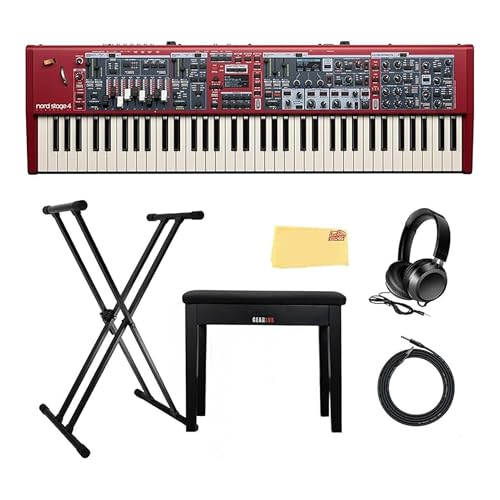
73-KEY WATERFALL KEYBED RANGE (E–E): Semi-weighted waterfall keybed with aftertouch enables fast organ techniques, glissando and smooth transitions for live performance
The Evolution of Piano Music Across Eras
Have you ever thought about how piano music has changed over the years? It’s really fascinating! Early keyboard pieces were often written for harpsichords, which only had about 60 keys. Can you picture trying to make music with that? Well, composers like Beethoven wanted more options, and that need for extra notes paved the way for the invention of the piano!
By the mid-19th century, piano designs evolved to include 85 keys. This shift wasn’t just about more notes; it reflected new musical styles that were emerging at the time. And by the late 1800s, we reached the standard 88 keys we know and love today! With this expanded range, musicians could now explore nearly seven octaves of varied sounds, from soft and delicate to bold and powerful.
Now, modern composers have the freedom to express a whole range of emotions through their music, whether it’s something whimsical or deeply dramatic. Many pianists use adjustable music desks to enhance their playing experience by accommodating the full 88-key range.
It’s amazing to think about how piano music has evolved over centuries, isn’t it? Next, let’s take a look at some of the iconic pieces that really highlight this evolution.
Fun Facts About Piano Key Counts
Hey there! Did you know that a standard piano has 88 keys? Yep, that’s right! Out of those, 52 are white keys and 36 are black keys. This cool setup lets you play a range of notes from A0, which is super low, to C8, really high up. Imagine trying to play your favorite tunes on one of those early pianos that only had about 60 keys—talk about a challenge!
As time passed and music developed, composers wanted more flexibility in their compositions. That’s why they added the last three keys in the late 1800s, giving pianists even more options. If you’re ever curious, check out a Bösendorfer Imperial Grand piano—it boasts 97 keys! That means you can explore even deeper bass notes if you want.
With 88 keys, pianos strike a fantastic balance between playability and the richness of music. It’s pretty amazing how this instrument has evolved to meet the needs of musicians throughout the years! Speaking of evolution, let’s chat about how piano skills have changed over time.
Recommended Products

88-key Digital Piano with Grade-weighted Hammer-action Wooden Keys
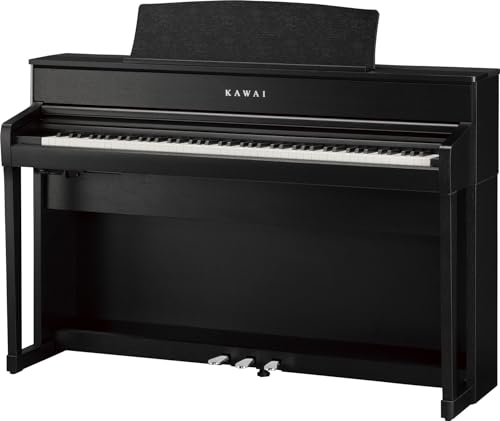
88-key Digital Piano with Grade-weighted Hammer-action Wooden Keys

The GP-3 is the most compact and affordable grand in the acclaimed GP series, bringing you premium piano performance in a unique low-profile design that makes a statement in any living space.
Frequently Asked Questions
Why Does a Piano Have 88 Keys and Not 84?
Q: Why does a piano have 88 keys instead of 84?
A: The piano has 88 keys as a result of historical design evolution aimed at providing a wider keyboard range and standardized tuning. This expanded range allows for greater expressive potential and meets the demands of complex contemporary musical compositions.
Tip: If you’re learning piano, focus on mastering the keys you use most often before trying to navigate the entire range.
Q: What is the significance of the expanded keyboard range?
A: An expanded keyboard range enables musicians to play more diverse musical styles and incorporate various techniques. This inclusivity supports the intricate demands of modern compositions, offering more creative freedom to pianists.
Caveat: While it’s beneficial to use the full range, beginners should concentrate on foundational skills before attempting advanced pieces that require extensive jumping across the keyboard.
Can You Legally Sell a Piano With Ivory Keys?
Q: Can I legally sell a piano with ivory keys?
A: Selling pianos with ivory keys is largely prohibited due to strict regulations surrounding ivory. Many countries have implemented laws that restrict the trade of ivory to protect endangered species.
Tip: Before attempting to sell, check your local laws and regulations regarding ivory to avoid potential legal issues.
—
Q: Why are ivory keys restricted?
A: The restrictions on ivory keys stem from conservation efforts to protect elephants and other species from poaching. These laws aim to curtail the market for ivory and promote the use of alternative materials in piano manufacturing.
Tip: Consider replacing ivory keys with synthetic alternatives, which are more widely accepted and legal for trade.
—
Q: What alternatives are available for piano keys?
A: Many manufacturers now use materials like plastic or wood composites to create piano keys that resemble ivory. These alternatives provide a similar feel and aesthetic without the legal complications associated with ivory.
Tip: When purchasing a piano, inquire about the materials used in the keys to ensure you’re making an ethically sound choice.
—
Q: Are there any exceptions for selling ivory pianos?
A: In some cases, antique pianos may have special allowances for sale, depending on age and provenance. However, exceptions can vary significantly by region, so it’s essential to do thorough research.
Tip: Obtain documentation proving the age and origin of the piano to better navigate legal requirements if you believe it qualifies as an exception.
Is It Better to Learn on 61 Keys or 88?
Q: What are the advantages of learning on an 88-key piano?
A: Learning on an 88-key piano enhances musical versatility and allows more comprehensive practice techniques. It enables students to explore complex compositions and harmonic structures more effectively.
*Tip: If space or budget is an issue, consider a weighted 76-key instrument as a middle ground.*
Q: Do 61-key keyboards offer any benefits for learning?
A: Yes, 61-key keyboards provide greater portability, making them easier to transport for lessons or travel. However, this can limit the learning of more extensive pieces and full-range techniques.
*Caveat: Ensure that the keyboard has features like touch sensitivity to aid in developing proper playing dynamics.*
What Is the 80 20 Rule in Piano?
Q: What is the 80/20 rule in piano practice?
A: The 80/20 rule in piano practice suggests that 20% of your focused effort can lead to 80% of your overall musical mastery. This principle highlights the importance of practicing smart rather than just hard, focusing on key elements that will yield the most significant results.
*Tip: Identify the essential skills or pieces that form the foundation of your playing and concentrate your efforts there.*
Q: How does the 80/20 rule apply to efficient key distribution?
A: Efficient key distribution means that by mastering a few critical skills or passages, you can effectively improve your playing across various pieces. This allows you to utilize your practice time better and cover more material with less effort.
*Caveat: Ensure that the skills selected have broad applications to different styles and pieces for maximum efficiency.*
Q: What role does music theory play in the 80/20 rule?
A: Understanding music theory provides the framework for interpreting and playing music more effectively, contributing to those critical 20% efforts that yield high rewards. Knowledge of scales, chords, and progressions can significantly enhance your playing and improvisation skills.
*Tip: Invest some time in learning how theory relates to the pieces you’re practicing to see accelerated improvement.*
Q: How can I prioritize essential skills according to the 80/20 rule?
A: Prioritizing essential skills involves identifying which techniques or pieces will have the most significant impact on your overall playing ability. Focus on areas that challenge you the most but also complement your musical goals.
*Caveat: Regularly reassess your focus areas to adapt your practice as you progress, ensuring continued growth.*