As an Amazon Associate, we earn from qualifying purchases. Some links on this site are affiliate links at no extra cost to you. Our recommendations are based on thorough research and editorial judgment.

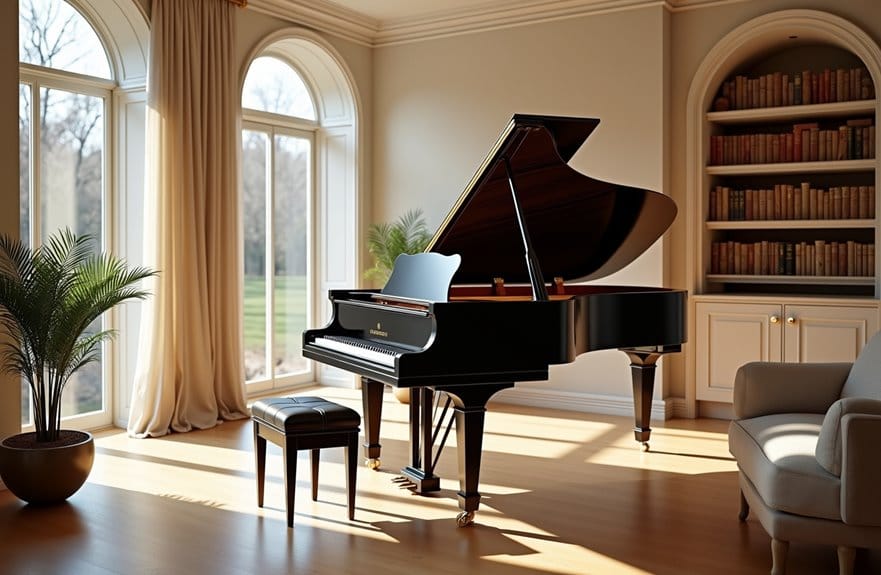
The Evolution of the Piano: From Harpsichord to Modern Grand

Discover the fascinating journey of the piano—a remarkable evolution from the harpsichord to the modern grand that has shaped the sound of music as we know it!
You may be interested
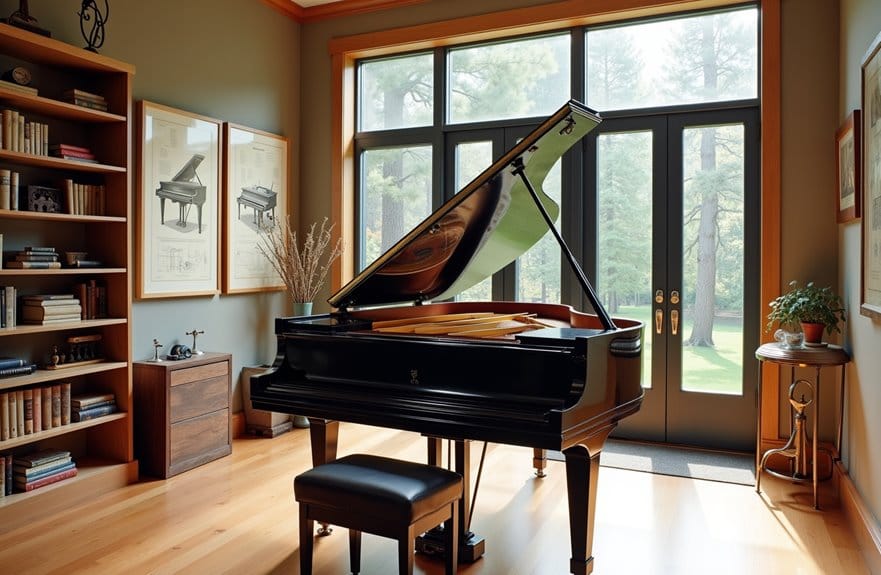
Whether you’re a music lover, aspiring pianist, or simply curious about musical history, this exploration will immerse you in the transformative innovations that have defined the piano’s development.
Learn how Bartolomeo Cristofori’s groundbreaking pianoforte introduced the ability to control volume, paving the way for expressive performances and leading to the sophisticated pianos we play today.
Get ready to uncover the impact of these changes on the music we treasure and reveal just how the piano has became an essential component of musical expression.
Key Takeaways
- The harpsichord and clavichord laid the foundation for keyboard instruments, emphasizing sound and volume control in music.
- Bartolomeo Cristofori’s invention of the pianoforte introduced dynamic control, allowing musicians to play both softly and loudly based on key pressure.
- Innovations by Broadwood and Stein during the Classical Era enhanced piano sound quality and responsiveness, making the piano central to performance.
- The Romantic Era saw the grand piano evolve, incorporating features like double escapement action for rapid note repetition and emotional expression.
- The Golden Age of Piano Manufacturing established modern grand pianos characterized by rich sound, advanced mechanics, and durable materials.
Origins: The Harpsichord and Clavichord

Have you ever thought about how the piano came to be? It’s fascinating when you consider its ancestors, the harpsichord and clavichord! The harpsichord, which popped up in Italy around 1500, creates a bright, crisp sound by plucking strings. But here’s the catch: it didn’t let musicians play softer or louder, which was something every musician really wanted.
Now, let’s talk about the clavichord! This instrument emerged in the early 14th century and was a real game-changer in the world of keyboards. It used a unique mechanism that struck the strings, allowing players to control the volume and even add vibrato. Imagine the emotional depth a musician could pull out of notes just by pressing a key differently!
Both instruments played such a vital role in shaping the future of keyboards. They really paved the way for the piano, meeting the growing need for emotions and versatility in music. It’s incredible to think how these early inventions influenced what we now love about playing the piano today! So, what’s next in the world of keyboard instruments? Let’s explore how these influences transformed into the stunning variety of pianos we have now! Interestingly, like guitar bracing supports rich sound, the piano’s internal structure also plays a crucial role in its resonance and tonal quality.
The Birth of the Pianoforte

Hey there! Have you ever thought about how the pianoforte changed the landscape of music? Invented by Bartolomeo Cristofori around 1700, this incredible instrument, known as the “gravicembalo col piano e forte,” introduced a whole new way to play—allowing musicians to produce sounds that were soft or loud just by the way they pressed the keys. How neat is that?
The magic of the pianoforte lies in its hammer action mechanism. Instead of plucking strings like its predecessor, the harpsichord, the piano’s hammers strike the strings directly. This means that if you touch the keys gently, you get a quiet sound, but if you hit them harder, you create a booming note. It opens up a whole world of expression! For example, think about how a pianist can play a delicate, whispering melody one moment, then transition to a powerful, thunderous climax—it’s all thanks to this design.
Cristofori also included an escapement feature, which lets the player hold notes longer. But at first, the pianoforte was a bit complex and pricey, so not everyone jumped on board right away. Still, Cristofori’s innovations set the stage for countless developments in piano design over the years. Modern digital pianos continue this legacy by incorporating graded hammer action keys to replicate this authentic playing experience. Isn’t it fascinating how one person’s creativity can shape an entire musical future? Now, let’s explore how the pianoforte influenced the composers of its time!
Recommended Products

Note: The power cord and earphones are packed in white foam on both sides of the package
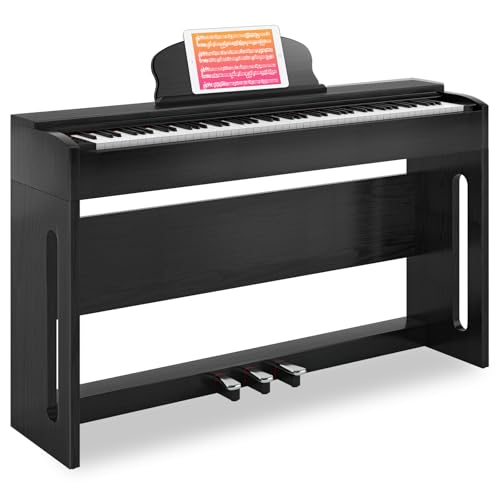
[Fully Weighted Professional Piano Keys]: Full-sized 88-key weighted keyboard, providing a smooth and high-response piano playing experience. Allows you to experience the feel of playing on a real piano. Size: 53.9"x29.13"x13.78"|Weight: 71.2 lbs; streamlined design, wooden case, three piano pedals (soft pedal, sustain pedal, and sostenuto pedal)

Note: The power cord and earphones are packed in white foam on both sides of the package
The Classical Era: Broadwood and Stein

You know, the “piano craze” really took over during the Classical Era, and it was pioneers like John Broadwood and Johann Andreas Stein who helped shape the piano into an incredible tool for musical expression! Broadwood made some significant improvements, like the introduction of the cast iron frame. This innovation meant that pianos could handle higher string tension, so they produced much louder and richer sounds than before. Also, he expanded the keyboard range and added a divided bridge, which opened up a whole new world for composers and musicians.
On the other hand, Stein made his mark with what’s known as the “Viennese action.” This design gave the pianos a lighter touch, making it easier for pianists to play expressively with dynamics. Imagine being a musician at that time, suddenly able to bring to life delicate notes and powerful crescendos that weren’t possible before! Thanks to their innovations, the piano became a key instrument in classical music and forever changed how people performed. It’s fascinating to see how these developments influenced the music we enjoy today! Many modern digital pianos incorporate weighted keys to simulate the authentic touch and dynamic response pioneered in this era.
Recommended Products

🎹 【Full-Weighted 88 key keyboard】The digital electric piano is constructed by 88 full-sized hammer action keys with adjustable touch response. This 88-key weighted keyboard allows to adjust your desired playing style.

Outstanding Sound Quality: Immerse yourself in the exceptional sound quality delivered by our digital piano, powered by the renowned French Dream5704 sound chip. The sound resonates with depth and emotion, creating a truly immersive musical experience. Choose from 8 distinct tones and explore a library of 40 demo songs that provide ample room for creativity and skill improvement.

SUPERIOR PLAYING EXPERIENCE: 88-key fully-weighted keyboard, 16-level touch sensitivity for authentic piano feel. Effortless control over dynamics for a better playing experience
The Romantic Era: Érard and the Rise of the Grand Piano
The Romantic Era was such an exciting time for music, especially with the grand piano taking center stage! This beautiful instrument changed how composers could share their emotions, allowing for a depth of expression that was previously unheard of. You know, in 1821, Sébastien Érard came up with the double escapement action, which let musicians repeat notes much quicker. It was a real breakthrough that matched the expressive needs of the era.
Just imagine the sound of a grand piano! With its thicker and longer strings, it creates a rich and full tone that can fill a room. This period also saw clever designs like the overstrung scale, which not only made the piano more durable but also boosted its sound quality. Musicians loved the piano’s versatility; they could create everything from soft, tender melodies to powerful crescendos that truly reflected their innermost feelings.
Isn’t it fascinating how instruments can evolve alongside artistic movements? The grand piano was very much a part of that magical transformation during the Romantic Era. The advancement of piano action parts, such as bridle straps and hammer replacements, further enhanced the instrument’s responsiveness and sound accuracy over time. Next, let’s explore some of the composers who took full advantage of this remarkable instrument and what they created.
The Golden Age of Piano Manufacturing
Hey there! Have you ever thought about the incredible transformations during the Golden Age of Piano Manufacturing? From the late 1700s to the early 1900s, this period brought some amazing innovations that turned pianos into these marvelous musical machines. Brands like Steinway & Sons and Bechstein rose to fame, and it’s easy to see why!
Picture a piano with a strong cast iron frame that allows for tighter strings. This design change meant that pianos could produce richer and more powerful sounds than ever before! This is when the modern grand piano truly came to life.
One of my favorite inventions from this time is the double escapement action introduced by Sébastien Érard in 1821. It made it possible for pianists to play notes in quick succession, much to the delight of performers everywhere. And let’s not forget about the overstrung scale, where the bass strings cross over the treble strings, resulting in those gorgeous harmonies we all love.
The piano became a beloved household item, spreading joy and creativity across the globe. It’s fascinating to think about how this era not only shaped music but also connected people through the love of playing. Ready to learn more about the impact of these instruments on music history?
Maintaining the fine mechanics of these instruments often involves replacing parts such as piano hammer replacements to preserve their sound quality and responsiveness over time.
The Modern Era: Technological Innovations
Have you ever thought about how the piano has evolved in our tech-savvy world? I mean, modern pianos are truly fascinating! They’ve adopted new materials like composites, which makes them tougher and more reliable, no matter the weather. For instance, if you live in a humid climate, your piano won’t warp as easily as it might have in the past. Isn’t that cool?
Then there are digital pianos. These little marvels use advanced sound technology to mimic the warm tones of traditional acoustic pianos. You’d be amazed at how realistic they sound! Plus, hybrid pianos combine the best of both worlds—allowing you to enjoy the rich sound of an acoustic piano while still having the convenience of digital features.
And here’s something interesting: many manufacturers are now focusing on being eco-friendly by using sustainably sourced wood. This means not just a good sound, but a commitment to the planet, too! With ongoing improvements in soundboards and action mechanisms, we can create music that’s more expressive than ever.
It’s exciting to see how the humble piano continues to adapt and thrive in this era. Who knows what innovations we’ll see next?
Additionally, the use of specialized microphone technologies in recording has greatly enhanced the way piano music is captured and experienced.
Recommended Products

The Ultimate Practice Keyboard for Beginners - Portable, lightweight, and easy-to-use music keyboard with built-in speakers delivering rich sound for an authentic and inspiring playing experience

PORTABLE KEYBOARD: The electric piano keyboard is great for practicing alone, jamming with friends, or performing on the go

The Impact of Piano Evolution on Musical Composition
You know, the evolution of modern pianos has really changed the way we think about musical composition. These days, pianos are packed with incredible technology that allows composers to play with dynamics in ways we’ve never seen before. It’s fascinating how this instrument can go from whisper-soft to thunderous in an instant!
Remember the harpsichord? Those sounds were pretty rigid compared to what we have now. With the modern piano, musicians can express emotions through techniques like rapid note repetitions, thanks to features like the double escapement action. Imagine how composers like Chopin and Liszt took full advantage of this! They crafted pieces that really showcased the piano’s expressive range, allowing them to convey deep emotions.
With ebony and ivory keys giving way to stories and feelings, it’s amazing how a percussion instrument can touch our hearts. The evolution of the piano has certainly shaped the landscape of music, hinting at how technological advancements continually influence artistic expression! What’s next in this fascinating journey of musical innovation?
One crucial advancement in digital pianos that enriches musical expression is the polyphony capability, which allows for more complex layering and greater sound depth during performances.
Notable Piano Innovations and Features
Have you ever thought about how pianos have evolved over the years? It’s pretty fascinating! The journey began with Cristofori’s piano, which introduced the hammer action mechanism. This clever design lets musicians play with different dynamics simply by varying how hard they hit the keys. Imagine being able to create soft, gentle melodies or powerful, booming chords all from the same instrument!
Then, in 1821, Sébastien Érard added the double escapement action. This innovation really changed the game for pianists, allowing them to play those fast and intricate passages easier. And when you look at grand pianos, their overstrung scales and sturdy cast iron frames provide not just rich tones but also incredible sustain. Think of how a single note can linger beautifully in the air!
Not to mention, John Broadwood enhanced pianos to produce even greater volume, making performances more impactful. Nowadays, modern pianos blend these classic features with durable materials and some nifty digital technology. It’s impressive how much creativity you can unleash with today’s pianos! There’s just so much to explore in the world of pianos, and it makes you wonder how they might continue to evolve.
Many pianists now use pedals with responsive action to add expressive dynamics similar to those found in grand pianos.
Recommended Products

Universal sustain pedal with chrome foot pedal for a natural, realistic pedal action

Wide Compatibility: Universal sustain pedal equipped with a polarity switch (N.O / N.C) and a standard 1/4" (6.35 mm) jack, compatible with most electronic keyboards and digital pianos.

Premium Alloy : This universal sustain pedal is made of premium alloy and high-strength plastic, so it's super strong and stable,pedal action is smooth and responsive.
Frequently Asked Questions
Who Invented the First Piano?
Q: Who invented the first piano?
A: The first piano was invented by Bartolomeo Cristofori in the early 1700s. This innovative instrument was a major advancement in keyboard technology and played a crucial role in the evolution of music.
*Tip: If you’re interested in piano history, consider exploring different piano variations that came after Cristofori’s invention for a deeper understanding of its evolution.*
Q: What made the first piano significant?
A: The significance of the first piano lies in its ability to produce both soft and loud sounds, which was a groundbreaking feature at the time. This dynamic range allowed for greater expression in music compared to earlier keyboard instruments.
*Caveat: While early pianos were revolutionary, their construction and sound differ markedly from modern pianos, so keep that in mind if comparing instruments.*
What Materials Are Used in Modern Piano Construction?
Q: What are the main wood types used in modern piano construction?
A: Modern pianos typically use rich wood types such as maple, spruce, and mahogany for their cabinetry and soundboards. These woods are chosen for their acoustic properties and aesthetic appeal.
*Tip: Ensure any piano you consider has a solid wood construction to enhance sound quality.*
Q: What materials are used for piano strings?
A: Resilient materials such as steel and copper are commonly used for piano strings. Steel strings provide durability and tension, while copper winding enhances the tone.
*Caveat: Regular maintenance is essential as strings can wear out over time, impacting sound quality.*
Q: How does soundboard construction influence piano resonance?
A: The soundboard is typically made from high-quality spruce, which is crucial for producing a rich, resonant sound. Its thickness and design directly affect the instrument’s tonal quality.
*Tip: Look for pianos with solid soundboards rather than laminated ones for improved resonance.*
Q: What options are available for piano finishes?
A: Diverse finish options, including glossy, matte, and satin, cater to various aesthetic preferences in modern pianos. These finishes also protect the wood and enhance durability.
*Caveat: Be mindful that certain finishes may require specific cleaning methods to avoid damage.*
Q: How do key mechanisms contribute to piano performance?
A: Intricate key mechanisms ensure precision in action, affecting the responsiveness and feel of the instrument. These mechanisms are a blend of traditional craftsmanship and modern engineering.
*Tip: Test the action of the keys to ensure they meet your playing style before purchasing a piano.*
How Do Piano Brands Differ in Quality?
Q: How do craftsmanship standards affect piano quality?
A: Craftsmanship standards greatly influence piano quality as they determine the attention to detail in design and construction. Higher-end brands often employ skilled artisans who ensure each component is meticulously crafted.
*Tip: When purchasing, inquire about the manufacturing process to gauge the level of craftsmanship.*
Q: How does brand reputation play a role in piano quality?
A: Brand reputation can indicate a history of quality products and customer satisfaction, with established brands often enhancing trust. Newer brands may offer innovative features but can lack the same reliability.
*Caveat: Don’t let brand reputation be your only factor; always test the piano for yourself.*
Q: What is the significance of sound quality in pianos?
A: Sound quality is a crucial differentiator among brands, impacting tonal richness and resonance. Premium brands generally invest more in soundboard materials and design, resulting in superior audio performance.
*Tip: Listen to various models in person to truly understand the sound before making a decision.*
Q: How do manufacturing techniques affect piano quality?
A: Evolving manufacturing techniques can enhance precision, consistency, and durability in pianos, with some brands embracing modern technology while others maintain traditional methods. Each approach can lead to different tonal qualities and longevity.
*Caveat: Research the specific techniques used by each brand to understand their impact on quality.*
Q: How does pricing differentiation highlight quality differences among piano brands?
A: Pricing often reflects the quality of materials, craftsmanship, and brand reputation, with higher prices usually correlating with better overall quality. However, price does not always guarantee superior performance; some mid-range options may offer exceptional value.
*Tip: Set a budget but be open to considering pianos that might exceed it if they provide significant quality advantages.*
What Is the Difference Between an Upright and Grand Piano?
Q: What is the main structural difference between upright and grand pianos?
A: Upright pianos have a vertical action mechanism, which allows them to save space, while grand pianos use horizontal strings that enhance resonance and sound quality. This design difference directly impacts the overall sound experience. Tip: Consider your available space when choosing between the two types.
Q: Why are grand pianos generally more expensive than upright pianos?
A: Grand pianos are often more costly due to their superior craftsmanship and acoustic capabilities, which contribute to a richer sound quality. The materials and construction involved in making a grand piano are typically of a higher standard. Caveat: Be prepared for potential additional costs such as maintenance and tuning for a grand piano.
How Has Piano Teaching Evolved Over Time?
Q: How has piano teaching evolved in terms of methodologies?
A: Piano teaching has shifted from traditional methods to more innovative approaches that incorporate various teaching styles and techniques. This evolution allows for personalized learning experiences that cater to individual student needs. Tip: Consider experimenting with different teaching methods to find what resonates best with each student.
Q: How has the diversity of musical genres influenced piano teaching?
A: The inclusion of diverse musical genres has enriched piano teaching by allowing students to explore a broader range of styles beyond classical music. This diversity encourages students to engage more fully with the instrument and fosters a love for music. Caveat: Be sure to balance genre exploration with foundational techniques to ensure comprehensive skill development.
Q: What role does technology play in modern piano teaching?
A: Advanced technology integration, such as online courses and music software, has transformed piano teaching by making resources more accessible and interactive. Technology can enhance learning experiences, providing students with tools to practice and learn effectively. Tip: Use apps and online platforms to supplement traditional lessons and keep students engaged.
Q: How have accessibility initiatives shaped piano teaching?
A: Enhanced accessibility initiatives have made piano education more available to a wider range of students, including those with disabilities. These initiatives ensure that all aspiring musicians have the opportunity to learn and enjoy playing the piano. Caveat: While accessibility is fundamental, it’s also crucial to tailor your teaching methods to ensure they are effective for each student’s specific needs.
Q: Why is student motivation important in piano teaching?
A: There is an increased focus on student motivation in piano teaching, recognizing that an engaged learner is more likely to succeed. Motivational techniques help students maintain interest and enthusiasm for practice and performance. Tip: Regularly set achievable goals and celebrate accomplishments to keep students motivated and committed to their piano journey.