As an Amazon Associate, we earn from qualifying purchases. Some links on this site are affiliate links at no extra cost to you. Our recommendations are based on thorough research and editorial judgment.


How Piano Pedals Change the Sound Acoustically

Discover the enchanting world of piano pedals and how they can dramatically alter the sound of your music!
You may be interested


Whether you’re a budding pianist or a seasoned performer, understanding how these incredible tools work is essential for taking your playing to new heights. The sustain pedal can make notes resonate beautifully, while the soft pedal adds a gentle touch, creating a delightful sweetness in your sound.
The sostenuto pedal is a game-changer, allowing you to hold specific notes while playing new ones. However, be cautious—over-pedaling can lead to a muddled effect.
Join us as we explore how these magical buttons can transform your piano playing and elevate your musical expression!
Key Takeaways
- The sustain pedal adds resonance to notes after keys are released, enriching the overall sound quality and depth of the performance.
- The soft pedal produces a gentler tone by reducing the number of strings struck, ideal for softer, more emotional music.
- The sostenuto pedal allows specific notes to sustain while others are played, enhancing harmonic layering and richness in sound.
- Effective pedaling techniques create sympathetic vibrations that amplify the sound, while over-pedaling can lead to a muddy tone.
- Acoustic pianos rely on mechanical systems for pedal functions, creating nuanced resonances distinct from digital simulations.
Understanding the Sustain Pedal and Its Impact on Sound

Hey there! Let’s talk about the sustain pedal, often called the magic button of the piano. It’s that pedal on the far right that really shapes how the music sounds. When you press it down, all the dampers lift, which allows the notes to resonate even after you’ve released the keys. Pretty neat, right?
Using the sustain pedal adds depth to your piano sound. It helps notes overlap, creating a richer, fuller tone. But here’s a tip: if you use it too much, things can get a bit muddy. For example, if you have fast passages, heavy pedaling can blur the clarity of the notes, making it hard to hear the distinct melodies.
To really get the hang of it, practice your pedal technique. A great way to start is with pre-pedaling—pressing the pedal just before you hit the note. Try to lift the pedal at the right moments to enhance the dynamics of the piece you’re playing. With a little practice, you’ll notice how the pedal can bring out a magical quality in your performance! Speaking of performance, what song are you thinking about trying to pedal with today? Also, choosing a pedal with responsive action can greatly improve your control and expression while playing.
Recommended Products

OPTIMUM PERFORMANCE: The dual Piano and Synth engines can be combined in a layer or split across the keyboard. Each layer has a dedicated effects section. The Nord Grand 2 has 7 Split Points indicated with LED lights and the Split Point Crossfades offer smooth transitions between two split zones. Choose from 3 different crossfade widths (Small, Large or Off] as indicated by different LED colors.

The GP-3 is the most compact and affordable grand in the acclaimed GP series, bringing you premium piano performance in a unique low-profile design that makes a statement in any living space.

Graded Hammer 3 (GH3) with synthetic ivory key tops add a tactile surface to the white keys, which absorbs finger moisture and prevents slipping.
The Role of the Soft Pedal in Altering Tone Quality

Have you ever wondered how the soft pedal—also called the una corda pedal—transforms the sound of a piano? It’s pretty fascinating! You’ll find this pedal on the far left of the piano, and when you press it, the hammers shift so that they strike two strings instead of three on grand pianos. This little adjustment gives the piano a softer, more delicate tone, which can really change how a piece feels.
Think about playing a romantic ballad. When you engage the soft pedal, it adds a warm, muted sound that’s just perfect for conveying those deep emotions. It allows you to play softer phrases effortlessly, so you can express those quiet moments without overwhelming the song. For example, if you’re playing Chopin’s Nocturne in E-flat Major, using the soft pedal can highlight the gentle beauty of the melody beautifully.
Many digital pianos replicate this effect by combining graded hammer action keys with adjustable keyboard sensitivity, allowing players to simulate the subtle tonal shifts produced by the soft pedal.
Recommended Products

Yamaha CFX and Bösendorfer Imperial piano samples bring two of the world's finest and most prominent concert grand pianos to your fingertips
SUPERNATURAL PIANO SOUND ENGINE: Advanced SuperNATURAL Piano sound engine delivers expressive dynamics from soft (pianissimo) to strong (fortissimo) performance
SLIM BODY DESIGN: With a depth of just 232 mm, Casio's proprietary high-density mounting technology, with miniaturized components and a space-saving internal structure, is key to the slim body of this 88-key piano. Two color variations are available: black and red. The bold single-color scheme and minimalist design aesthetic together deliver a simple yet elegant piano experience.
Exploring the Sostenuto Pedal for Selective Sustain
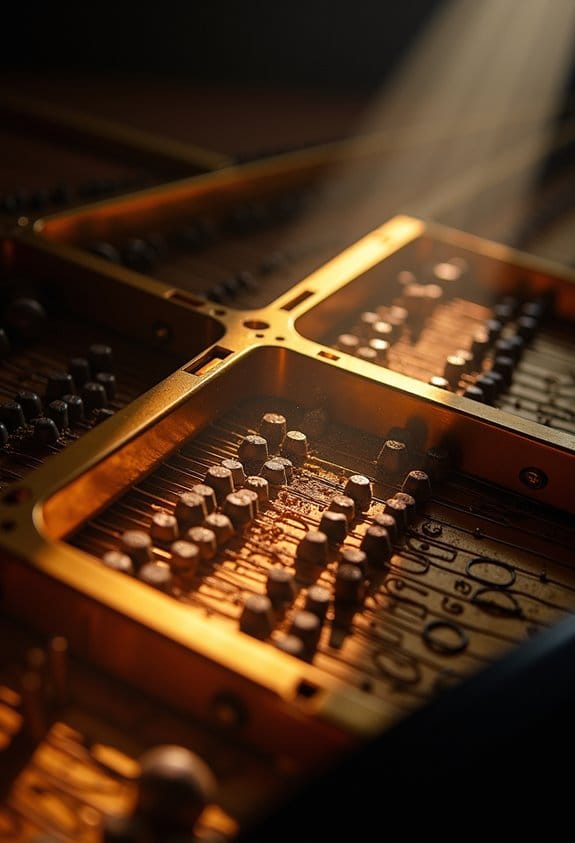
Hey, did you know that the sostenuto pedal can completely transform your piano playing? It’s a fascinating tool, and you typically find it on grand pianos. What makes the sostenuto pedal special is that it lets you sustain specific notes while you play new melodies on top—like holding down a beautiful chord in the background while striking out fresh tunes!
This pedal adds a unique depth to your music, making it sound fuller and more layered. For example, you can hold down the notes of a rich chord while adding a playful melody on top, giving each part a distinct character. But here’s a little tip: mastering this technique isn’t always straightforward. You’ll want to practice balancing when you press the pedal with when you hit the notes so that everything remains clear and harmonious.
Just keep in mind, not every piano has a sostenuto pedal, so it’s worth checking before you jump into your playing! With a bit of practice, you’ll be amazed at how this pedal can enhance your sound. It’s such a neat addition to your musical toolkit! Speaking of tools, let’s chat about other techniques you can use to elevate your performances even further. For instance, using high-quality piano wool balance rail punchings can improve your piano’s touch and reduce unwanted noise for a richer acoustic experience.
Recommended Products

Sleek Style Meets Exceptional Sound - Digital home electric piano, delivering an authentic playing experience paired with stunning looks, the Recital Home is sure to be a conversation starter

Sleek Style Meets Exceptional Sound - Digital home electric piano, delivering an authentic playing experience paired with stunning looks, the Recital Home is sure to be a conversation starter

🎹 Genuine Weighted Hammer Action – Authentic Grand Piano Feel Features 88 fully-weighted keys with progressive hammer action – heavier in bass, lighter in treble. The French 5704 sound source chip delivers concert-grade sound with 192-note polyphony, ensuring every note rings clear even during complex chords.
Techniques for Effective Pedaling
Effective pedaling techniques can really transform your piano playing from good to something special! Think of the sustain pedal as a way to make notes resonate, creating those lovely sympathetic vibrations that can fill a room with sound. But here’s the catch: if you press the pedal too much, the music can become muddy and lose its clarity.
To keep everything sounding crisp, it helps to be mindful of when you press and release the pedal. Try using half, quarter, and eighth pedal techniques. For instance, if you press the pedal on the second beat of a measure and lift it on the downbeat, you’ll create a smooth transition between notes, achieving that legato effect we all love!
And here’s a fun trick: finger pedaling. This technique involves lifting the pedal during quick note sequences to isolate specific notes, adding clarity to your playing. For example, if you’re playing a fast scale, let go of the pedal at key moments, giving your notes that extra punch. With these techniques in your toolkit, you’ll be well on your way to playing like a pro! It’s all about practicing and finding what works for you. Speaking of practice, let’s talk about how to incorporate these techniques into your daily routine! Ensuring your pedal has polarity switch functionality can enhance your playing experience by making it compatible with various keyboards.
Recommended Products

88-key Stage Piano with Dual Sound Engines, PHA-50 Progressive Hammer-action Keybed, Advanced Controller Functionality; Keyboard Stand, Sustain Pedal, and Keyboard Bench

88-key Digital Piano with SuperNATURAL Modeling, PHA-4 Keyboard with Progressive Hammer Action and Escapement, Onboard FX, Speaker System, and Audio/MIDI via Bluetooth and USB, Folding Stand, Bench, and Sustain Pedal - Black

Product 1: Graded Hammer Compact (GHC) keyboard action uses weighted keys to replicate the acoustic piano experience, with a compact design that saves space without sacrificing authenticity.
Acoustic vs. Digital Piano Pedal Functionality
You know, playing the piano isn’t just about hitting the right notes; it’s also about how those notes come alive through the pedals! When you’re on an acoustic piano, you’re working with real mechanical systems. For instance, pressing the damper pedal lifts the dampers off the strings, allowing the notes to resonate beautifully. Just imagine holding a note and letting it ring for over 30 seconds—it creates such a rich sound!
Now, with digital pianos, things work a bit differently. They simulate pedal functionality electronically, which is clever, but it doesn’t always capture the same magic. For example, while a basic sustain pedal might let you mimic that long, sustained sound, it often lacks the subtle touch and dynamic range that seasoned pianists thrive on. So, while you can certainly enjoy playing on a digital piano, you might miss those intricate nuances that come with an acoustic experience. Many quality digital pianos also offer advanced sound engines to enhance the realism of pedal effects.
Recommended Products

SOUND ENGINE DESIGN: The Roland Keyboard features four independent sound engines, including acoustic piano, electric piano, organ, and ZEN-core synthesizer engines, delivering a wide range of versatile tones ideal for professional stage performance

DUAL SOUND ENGINES: Experience incredible realism and versatility with Roland’s SuperNATURAL and V-Piano engines, delivering deep, expressive piano tone for any genre or performance style

88 wood keys with synthetic ebony and ivory key tops, Graded Hammer (GH3) action and triple sensor for Grand piano response (CP88)
Frequently Asked Questions
What Do Piano Pedals Actually Do?
Q: What do piano pedals do?
A: Piano pedals serve several essential functions, including enhancing acoustic resonance with the sustain pedal, providing dynamic control with the una corda pedal, and improving sound projection through pedal timing techniques. These mechanisms work together to enrich the piano performance.
*Tip: Familiarize yourself with each pedal’s role gradually; over-using the sustain pedal can muddy the sound.*
Q: How does the sustain pedal enhance resonance?
A: The sustain pedal lifts the dampers off the strings, allowing them to vibrate freely. This creates a fuller and more resonant sound, as notes can linger longer even after keys are released.
*Caveat: Practice using the pedal sparingly to avoid unintended blurring of notes in fast passages.*
Q: What is the una corda pedal used for?
A: The una corda pedal shifts the piano action so that hammers strike fewer strings, producing a softer and gentler tone. This provides the pianist an additional layer of expression for softer passages.
*Tip: Experiment with subtle pressure on the una corda pedal to achieve a delicate sound without losing clarity.*
Q: How do pedal timing techniques impact performance?
A: Timing techniques, such as when to press or release the pedals, affect the overall sound projection and enhance musical expression. Proper pedal timing allows for seamless transitions between notes and chords.
*Caveat: Develop a consistent pedal timing practice to avoid disruptive changes in sound, especially in faster or intricate pieces.*
How Do Pianists Manipulate Sound?
Q: How do pianists manipulate sound dynamics?
A: Pianists utilize pedal techniques to control sound dynamics, similar to how a painter uses a brush for artistic expression. These techniques allow for enhanced tonal variation and greater emotional impact in their performances.
*Tip: Practice varying your use of the sustain pedal to discover how it affects tonal quality.*
—
Q: What role does articulation control play in playing the piano?
A: Articulation control helps pianists achieve rhythmic flexibility and precise sound layering. By manipulating how notes are played, pianists can convey different emotions and nuances in their music.
*Caveat: Ensure that changes in articulation maintain clarity in sound to avoid muddiness in performance.*
—
Q: How does pedal use affect musical expression?
A: The use of pedals, particularly the sustain pedal, contributes significantly to musical expression by allowing notes to blend and resonate. This technique can shape the overall atmosphere of a piece, making it feel more cohesive and dynamic.
*Tip: Experiment with half-pedaling to achieve a subtler control over sound and maintain clarity between notes.*
Which Piano Pedal Makes It Quiet?
Q: Which piano pedal makes it quiet?
A: The soft pedal is the piano pedal designed to reduce sound by changing how the hammers strike the strings. It allows for quieter practice and is essential for specific expressive techniques.
*Tip: Ensure your piano is properly maintained to maximize the effectiveness of the soft pedal, as worn hammers may not produce the desired sound reduction.*
Q: How does the soft pedal work?
A: The soft pedal works by shifting the action of the hammers, causing them to strike fewer strings or adjust the force of the impact. This results in a softer sound, ideal for practice or softer musical passages.
*Caveat: Be mindful that excessive use of the soft pedal may not be suitable for all compositions, as it can alter the intended dynamics of the music.*
Q: What is the historical significance of the soft pedal?
A: Historically, the soft pedal has evolved to enhance musical compositions by allowing for more dynamic range and emotional expression. It has become an essential tool for pianists to explore different sound textures.
*Tip: Familiarize yourself with the repertoire that utilizes the soft pedal effectively to appreciate its full potential in your playing.*
Q: Why is maintaining the soft pedal important?
A: Proper maintenance of the soft pedal is crucial for ensuring its functionality and effectiveness in performance. Regular tuning and servicing of the piano will help the pedal operate smoothly and produce consistent results.
*Caveat: If you notice inconsistencies in sound when using the soft pedal, consult a piano technician to prevent further issues.*
What Do the Paddles Do on a Piano?
Q: What do piano pedals do?
A: Piano pedals enable sound modulation and dynamic control. They enhance tonal variety by allowing for sound sustain and expressive playing, making each performance unique.
Tip: Practice using the pedals regularly to develop your foot coordination and improve your overall playing technique.
Q: How does each pedal contribute to performance?
A: Each type of piano pedal serves a distinct function; for instance, the sustain pedal extends the duration of notes, while the soft pedal reduces the volume and alters tone. Their combined use can create intricate sound dynamics.
Caveat: Be mindful of overusing the pedals, as it can muddy the sound and diminish clarity in your playing.
Q: Can you blend notes using the pedals?
A: Yes, pedals allow for blending notes, enabling transitions between chords and melodies that create a more cohesive musical narrative. This technique adds depth and emotion to your performance.
Tip: Experiment with timing when pressing the pedals to find the right balance for blending notes without losing clarity.


