As an Amazon Associate, we earn from qualifying purchases. Some links on this site are affiliate links at no extra cost to you. Our recommendations are based on thorough research and editorial judgment.


What Is the Difference Between a Fortepiano and Modern Piano

Are you a music enthusiast wondering about the captivating differences between the fortepiano and modern piano?
You may be interested

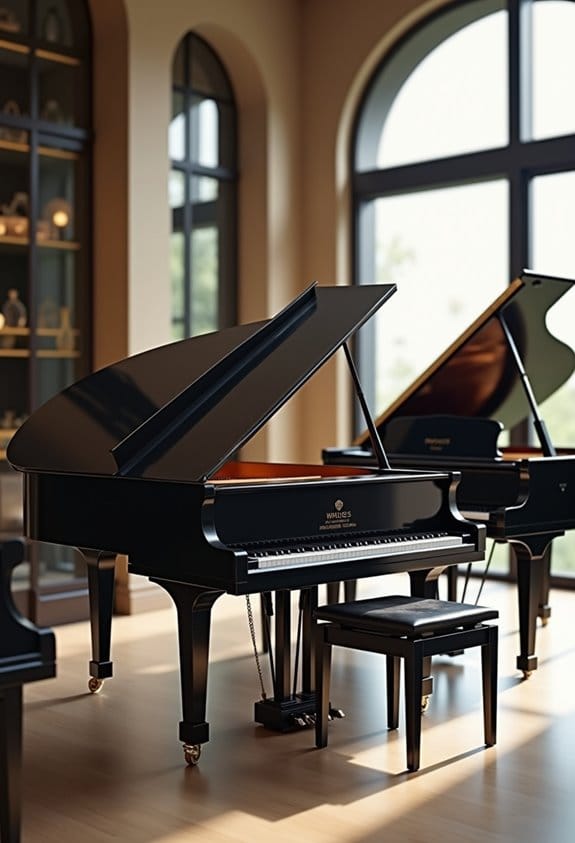
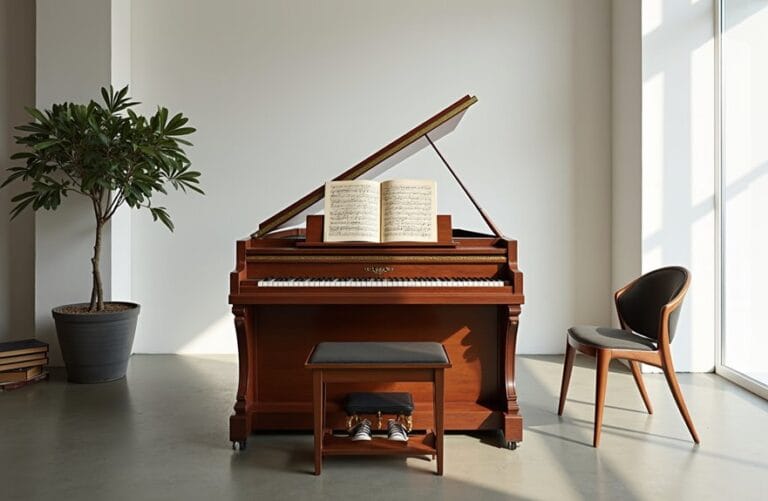
These two iconic instruments tell unique stories through their sound and construction. The fortepiano, with its lighter build, has about five octaves and produces a sweeter, softer sound with lower string tension—imagine a gentle breeze compared to a roaring wind!
This distinct design allows for expressive dynamics that modern pianos struggle to replicate. In this exploration, you will discover how these differences influence the way music is created and experienced, unlocking a deeper appreciation for both instruments and their roles in music history.
Key Takeaways
- The fortepiano has a lighter construction, weighing around 187 pounds compared to the modern piano’s up to 990 pounds.
- It features a lower string tension of about 2,094 pounds versus the modern piano’s 45,014 pounds, affecting sound quality.
- Fortepianos produce a softer tone with a limited dynamic range of five octaves, while modern pianos have a broader range and sustain.
- The keys of a fortepiano are lighter and shorter, prompting different playing techniques and expressive dynamics.
- Fortepianos offer a distinct sound characterized by rich overtones and a silvery quality, differing from the more powerful modern piano sound.
Overview of Fortepiano

The fortepiano is such an intriguing early version of today’s piano! It really acts like a bridge between the music of the past and what we enjoy now. You know, this instrument was invented by Bartolomeo Cristofori way back in 1700. One of the coolest things about the fortepiano is how it lets musicians play with dynamics. You can choose to play softly or loudly just by adjusting how you touch the keys—imagine that personal touch in every performance!
Composers like Haydn and Mozart were huge fans of its distinctive sound. Unlike modern pianos, which have about 7.5 octaves, the fortepiano typically has around five. You can think of it as a more compact version! Another neat feature is its lighter hammer action; the hammers weigh only about five grams, which gives each note a gentle, intimate feel. It’s like the instrument is whispering rather than shouting, especially because the hammers are often covered in leather!
If you’re curious about what this sound is like, listening to some of Mozart’s piano concertos on a fortepiano can give you a taste of its charming, delicate character. Overall, the fortepiano brings a unique texture to music that’s not quite the same on modern pianos. It really makes you appreciate the evolution of these fascinating instruments! Modern digital pianos often use graded hammer action to simulate the nuanced touch that instruments like the fortepiano originally offered.
Recommended Products

【Multifunctional 61 Keys Piano】The 61-key keyboard piano integrates professional-grade features including microphone output, rhythm programming, recording/playback functionality, single-finger/multi-finger chord systems, and dynamic sound effects (sustain, vibrato, echo).

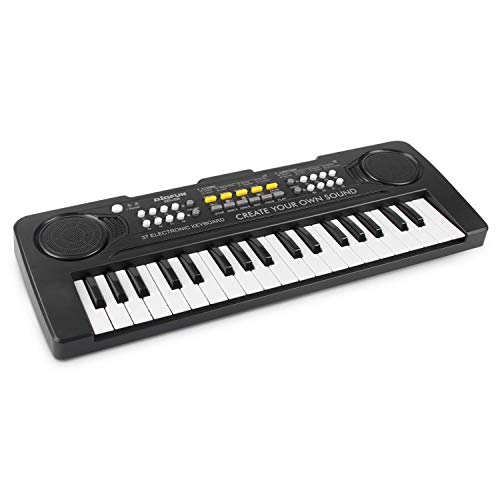
MULTIFUNCTIONAL 37 KEYS PIANO: Play the piano function + DOUBLE SPEAKERS + ensemble mode + keyboard drum + record playback function + Automatic standby sleep function + 8 tones + 8 rhythms + 11 demo + 4 percussion
Construction Differences
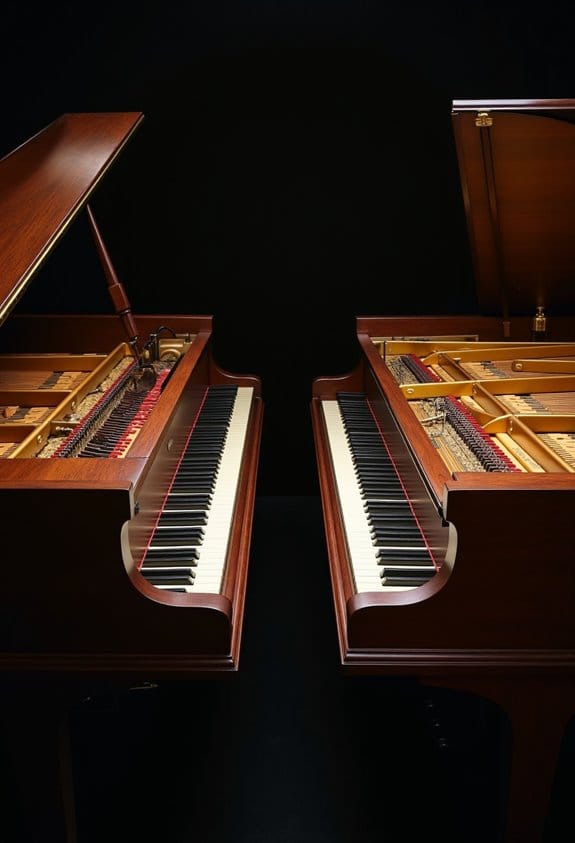
Have you ever thought about the construction differences between fortepianos and modern pianos? It’s pretty fascinating! For starters, a fortepiano is much lighter—around 187 pounds—compared to a grand piano, which can weigh a massive 990 pounds. Imagine moving all that weight!
Now, let’s talk strings. A fortepiano has a string tension of about 2,094 pounds, while those modern pianos? They can reach an incredible 45,014 pounds. That’s a serious difference! This added tension affects how the keys feel when you play. Speaking of keys, did you know that the keys on a fortepiano are about half the weight of those on modern pianos? This makes them super responsive and easier to play, but they only cover about five octaves compared to the 7.5 octaves on a modern piano.
And get this: the key dip on a fortepiano is only a third of what you find on modern pianos, which changes your touch and playing style. Isn’t it cool how these small differences can impact your experience? There’s so much more to explore about how these instruments have evolved over time! The quality of materials, similar to how spruce enhances tonal clarity in acoustic instruments, plays a crucial role in the fortepiano’s distinctive sound and responsiveness, emphasizing the importance of structural integrity.
Recommended Products

![Mozart: Keyboard Song Collection Vol. 8 & Vol. 9 (Mozart: Keyboard Music Vols. 8 & 9 / Kristian Bezuidenhout (fortepiano) (2CD) [Import Board] [Japanese Belt and Instructions Included]](https://m.media-amazon.com/images/I/51KV7QgrbJL._SL500_.jpg)

Sound Characteristics

When you think about sound characteristics, fortepianos really bring a unique flair to the musical experience! These charming instruments have a softer tone and less sustain compared to modern pianos, which means they can really highlight the little details in the music. Imagine playing a piece where the notes have rich overtones and a silvery quality that seems to float through the room—it’s truly enchanting!
Fortepianos allow for more subtle expression, making it easier to add graceful flourishes. Their dynamic range is pretty limited, only covering about five octaves, which encourages musicians to be creative with their interpretations. For instance, when you hit a pronounced sforzando accent, the impact is much clearer and punchier, whereas modern pianos might smooth that out.
Isn’t it interesting how these distinct sound characteristics create such an intimate feel in music? With fortepianos, every note becomes something special, almost like a whispered secret shared among friends. It’s a lovely way to connect with the audience, don’t you think? Maintaining the right level of humidity with a piano humidity sensor can significantly help preserve the delicate characteristics of such instruments over time.
Recommended Products

Smart App Control: Easily monitor temperature and humidity in real-time on the app. 262ft connecting distance (no obstacles) allows you to quickly get data remotely from anywhere in your home. (Not WiFi Version)

DHT11 digital temperature and humidity sensor is a digital signal output with a calibrated temperature and humidity combined sensor.

Compatible With Models Having Tank Capacities of 50 and 70 Pints.
Historical Context
Hey there! Did you know that the fortepiano emerged in the early 1700s and sparked a whole musical revolution? It was invented by Bartolomeo Cristofori and quickly took over from the harpsichord. This new instrument allowed composers and performers to play music with both soft and loud notes, which totally changed how people experienced keyboard music.
Imagine listening to a Mozart sonata where you can hear delicate whispering melodies followed by powerful, booming sections. By the 1760s, the fortepiano was everywhere, often replacing the older harpsichord in concert halls and homes alike. Then, as we zoom into the 19th century, the modern piano made its debut, featuring strong metal frames that held strings under higher tension, allowing for even richer sounds and greater volume.
This shift in design not only expanded what composers could create but also influenced how everyone played music. So, as you explore compositions from this exciting era, just think about how the evolution of the fortepiano shaped the musical landscape. Isn’t it fascinating how musical instruments can reflect the innovations of their time? For musicians today, selecting the right adjustable piano bench can similarly enhance playing comfort and posture as they engage with music from these historical periods.
Performance Techniques
Playing the fortepiano is such an exciting experience! It’s like having a dialogue with the music because of how responsive its lighter keys are. This allows musicians to achieve expressive dynamics that can be a bit tricky on a modern piano. For example, if you’re playing a soft passage, you can feel the subtleties in your fingers, allowing you to bring out emotions in ways that are truly magical.
Another cool aspect of fortepiano playing is how it encourages delicate ornamentation. It’s like dressing up your music with little sprinkles—these subtle embellishments make the sound really come alive! When you compare it to a modern piano, playing on a fortepiano can feel more fluid and effortless, making every note feel lighter and more vibrant.
Moreover, the fortepiano has a limited dynamic range, which means you might explore faster articulations more often. Imagine racing through rapid scales; the challenge can be exhilarating! Ultimately, these performance techniques focus on clarity and finesse, helping you connect more deeply with the emotions of the pieces you’re playing. It’s such a joy to experience—a true musical adventure waiting to be explored!
For musicians interested in amplification, understanding control and adjustability features can greatly enhance how you project and shape your sound during performances.
Recommended Products

【SPACIOUS & SECURE HOLDING TRAY】 Our deep 2-inch tray comfortably accommodates thick music books and binders. Features reinforced, high-tension spring arms to firmly grip sheet music, tablets, or even a lightweight laptop, ensuring they stay perfectly in place during intense performances.

FLEXIBLE AND ADJUSTABLE - Collapsible design with height adjustment from 28.7 inches to 51.2 inches and 90 degrees fully adjustable angle tilting bookplate make this stand perfect for sitting or standing, and the vented tray, tall, wide, and deep enough to hold any kind of music sheet or books.

Perfect Size: Music stand length:49.5CM (19.5 in) .Height: 22.5cm (8.9 in). Support stand width: 7cm (2.8 in) .2 support intervals: 35.2cm (13.9 in) .Sheet music clip size: 5.9 inches x 0.8 inches.
Musical Interpretation
Hey there! Have you ever thought about how musical interpretation on the fortepiano can really change the way we experience classical music? This instrument lets performers tap into the true intentions of composers from back in the day, and here’s why: it has a beautiful range of dynamics that brings out subtle details that modern pianos might miss. For instance, with a fortepiano, you can hear the soft whispers of a piece or those little expressive touches that make the music feel alive.
When musicians play on a fortepiano, they’re often able to give a more authentic interpretation of classical pieces, sticking closely to how they were originally meant to be performed. Imagine hearing a sonata where the quieter notes shine through, or where there’s a neat, distinct way of playing each note that feels fresh and captivating. It creates a listening experience that’s truly special!
But switching from a modern piano to a fortepiano doesn’t come without its challenges. Musicians need to learn how to replicate those charming sounds that the fortepiano produces, which can take some practice. Still, the journey is rewarding. Not only does it enhance their skills, but it also deepens their understanding of the history behind the music. So, if you love classical music, exploring the fortepiano can really enrich your appreciation for it. Now, let’s talk about a specific piece that showcases the unique qualities of this instrument!
Moreover, understanding polyphony can also enhance how musicians approach layering and sustaining notes, even when transitioning between instruments like the fortepiano and modern piano.
Modern Perspectives on Fortepiano
Hey, did you know that the fortepiano is making a comeback? It’s pretty exciting! Musicians and audiences are rekindling their love for this unique instrument, and artists like Malcolm Bilson showcase its wonderful sound. You can really hear the difference when you play a fortepiano compared to a modern piano—the tones are less about being “pretty” and more about adding depth and emotion to the music.
Fortepianos are built based on historical designs, which means they allow musicians to interpret classical works by Mozart and Haydn more authentically. For instance, the lighter hammers on a fortepiano enable finer details and more nuanced ornamentation, which can be hard to pull off on a modern piano. It’s like trading in your bulky snow boots for a pair of sleek, precise ice skates; you just feel more in control.
As we’re seeing more performances that honor historical techniques, the fortepiano is really stepping into the spotlight! Isn’t it amazing how something from centuries ago can still resonate with us today? It’s an exciting time for classical music, and there’s so much more to explore about how these instruments shape our understanding of the past. Upgrading the instrument’s performance can also be enhanced with high-quality felt bushings, which protect internal components and contribute to better sound and responsiveness.
Recommended Products

Piano Felt Key Bushing Cloth - Thin
Piano Felt Key Bushing Cloth - Medium Thickness
Significance in Classical Music
Hey, have you ever heard of the fortepiano? It’s such a fascinating instrument that really connects us to the world of classical music! You see, its unique sound and dynamic range can really bring out the expressive intentions of composers like Mozart and Beethoven. Imagine listening to one of their pieces and being able to hear all the subtle details—those delicate trills and fancy ornamentations—that might get lost on a modern piano.
What’s super cool is that many classical music pieces from the 18th and early 19th centuries were actually written with the fortepiano in mind. This instrument has a lighter touch, which allows musicians to create nuanced dynamics. For instance, when you play a soft passage on a fortepiano, you can really hear those intricate notes dance together in a way that feels so alive.
Historically, the fortepiano was at the center of music-making, and many performers used it to interpret classical works authentically. If you ever get a chance to listen to a live performance featuring a fortepiano, I highly recommend it. It really deepens your appreciation for how composers like Haydn and Schubert intended their music to sound. As we explore more about the instruments that shaped classical music, you’ll find even more surprises that connect us back to its enchanting legacy! Additionally, just as with musical instruments, regular maintenance and adjustments are essential to keep them sounding their best over time.
Frequently Asked Questions
What Is the Difference Between Fortepiano and Modern Piano?
Q: How does the sound of a fortepiano differ from a modern piano?
A: The fortepiano produces a delicately nuanced sound, focusing on expressive subtleties. In contrast, the modern piano is designed for dynamic power and broader volume range.
*Tip: If you perform on a fortepiano, pay attention to your touch and dynamics to fully explore its expressive capabilities.*
Q: What do historical piano usage and performance techniques reveal?
A: Historical piano usage highlights the evolution of performance techniques, reflecting the diverse musical advancements between the fortepiano and modern piano. As these instruments developed, they adapted to changing musical styles and preferences.
*Caveat: Understanding historical context is crucial; be mindful of the era’s stylistic practices when interpreting music from that time.*
Did Mozart Play Piano or Fortepiano?
Q: Did Mozart play piano or fortepiano?
A: Mozart favored the fortepiano, an instrument that significantly enhanced his classical repertoire. Its distinctive sound and capabilities influenced his piano techniques and inspired the historical performance practices of his time.
*Tip: If you want to experience Mozart’s music authentically, consider listening to performances on a fortepiano rather than a modern piano.*
Q: How did the fortepiano shape Mozart’s playing style?
A: The fortepiano’s unique characteristics allowed for greater expressive nuance and dynamic range, which were essential to Mozart’s compositions. This instrument encouraged him to explore a wider palette of tonal colors in his music.
*Tip: When practicing Mozart’s works, pay attention to dynamics and articulation to emulate the expressiveness associated with fortepiano playing.*
Why Might a Pianist Today Prefer a Modern Instrument to the Fortepiano?
Q: Why might a pianist prefer modern instruments over the fortepiano?
A: A pianist today might choose modern instruments due to their superior sound quality, which provides a richer tone and clarity. Additionally, modern pianos offer enhanced touch response, allowing for greater expressiveness in playing.
*Tip: When selecting a piano, test different brands to find one that suits your playing style and sound preferences.*
Q: How adaptable are modern pianos to different genres?
A: Modern pianos are designed to be versatile, accommodating a wide range of musical genres from classical to contemporary. This flexibility allows pianists to explore and perform in various styles without needing to switch instruments.
*Caveat: Keep in mind that a piano’s construction may affect its suitability for certain genres; some may perform better in specific styles than others.*
Q: How do modern pianos fit into contemporary historical contexts?
A: Modern pianos often incorporate contemporary materials and designs that align with current performance practices and aesthetics. This makes them more relevant for pianists who are engaging with modern compositions or reinterpretations of classic works.
*Tip: Consider how the piano’s features can enhance your interpretation of specific pieces while still respecting historical context.*
What Are the Three Types of Pianos?
Q: What are grand pianos?
A: Grand pianos are known for their superior sound quality and exquisite craftsmanship, making them a popular choice for professional musicians and concerts. Their larger size allows for a richer tonal range. Tip: Consider the available space in your home, as grand pianos require ample room for placement and play.
Q: What are upright pianos?
A: Upright pianos are designed to be more compact, making them suitable for smaller spaces while still providing a satisfying sound. They are ideal for homes where space is limited but musical enjoyment is desired. Caveat: Upright pianos may not deliver the same sound quality and dynamic range as grand pianos, so test the piano before purchasing.
Q: What are digital pianos?
A: Digital pianos offer versatile features such as various instrument sounds and recording capabilities, providing more options for both practice and performance. They often include weighted keys to simulate an acoustic piano feel. Tip: Always check for key sensitivity and feel during a trial to ensure it matches your playing style and preferences.