As an Amazon Associate, we earn from qualifying purchases. Some links on this site are affiliate links at no extra cost to you. Our recommendations are based on thorough research and editorial judgment.


How to Harmonize a Melody on Piano

Are you ready to elevate your piano playing and have fun while harmonizing a melody?
You may be interested


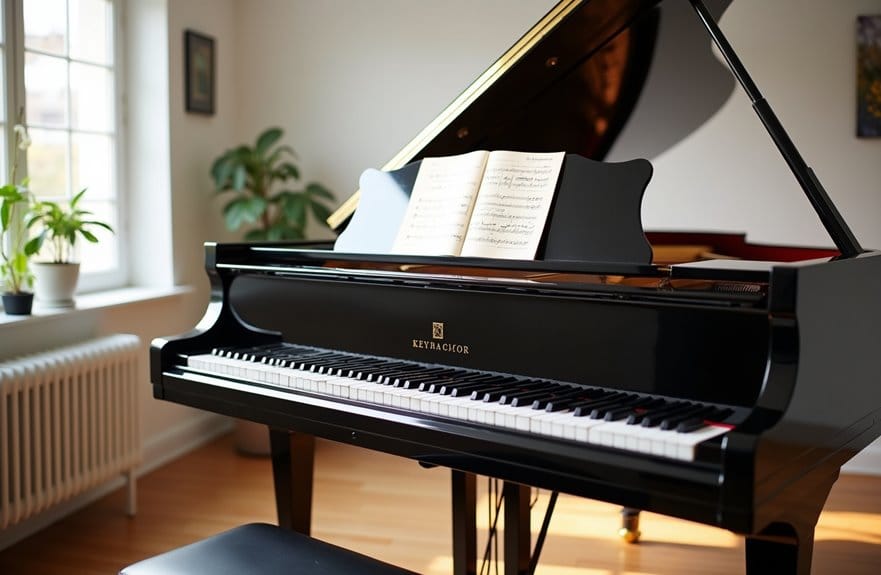
If you’re a musician looking to enhance your skills, this guide is just for you! Harmonizing a melody on piano can transform a simple tune into a rich musical experience.
You’ll learn how to start by identifying the key signature and the essential chords: I, IV, and V, which serve as the building blocks for your harmonization.
Discover how to align your chords with target notes to create engaging downbeats, and explore the creative potential of using extended chords or even adding a relative minor.
Let’s dive into the magic of harmonization and unlock your musical potential together!
Key Takeaways
- Identify the key signature to determine which chords to use for harmonizing the melody effectively.
- Match target notes in the melody with chord tones for harmonious integration.
- Use primary chords (I, IV, V) in the key to build a strong harmonic foundation.
- Experiment with chord inversions and extensions to add depth and interest to your harmonization.
- Resolve melodies on the tonic chord to create a satisfying conclusion to your piece.
Understanding Key Signatures

Understanding key signatures is like finding the key to your favorite song! They’re super important because they indicate which notes and scale a piece uses. Take C Major, for example—there are no sharps or flats to worry about, making it easy for musicians to harmonize and create beautiful melodies together.
When a melody wraps up on the tonic note, like C in C Major, it signals that you’re in that key. Plus, the Circle of Fifths is a handy tool for seeing how different keys connect with each other. For instance, if you see two sharps, F# and C#, you’re likely in D Major or B Minor—both great keys with their own unique character.
Isn’t it fascinating how these little symbols can open up a world of musical possibilities? As we explore more about harmony and chord progressions, you’ll see how these key signatures play a vital role in shaping the sounds we love.
Playing a piano with graded hammer action keys can help you better express the nuances of these harmonies as you experiment with different chord progressions.
Primary Chords

You know, primary chords are really the heart of music. They give you that solid foundation you need to harmonize a melody effortlessly! If you break it down, these chords are the I (tonic), IV (subdominant), and V (dominant). They show up in pretty much every key, making them essential tools for any musician.
Take the key of C major, for example. The primary chords here are C major (that’s the C chord), F major, and G major. They’re super straightforward, which is why beginners love working with them. You can use these chords to create awesome progressions like C-F-G, and it sounds fantastic!
When you throw in primary chords while harmonizing a melody, you’re setting up some strong tonal centers and smooth resolutions. It’s kind of like giving your melody some sturdy boots to trek through a musical wilderness. So, next time you sit down at the piano, remember how powerful these chords can be—they’re your trusty sidekicks in making great music! And once you feel comfortable with these, you can start exploring more complex chords and progressions. To enhance the sound quality of your piano playing, consider improving your setup with acoustic piano soundboards that help manage resonance and clarity.
Matching Chords With Target Notes

You know how matching chords with target notes is like finding the perfect dance partners? Each note needs its right match to truly shine! Think about it: target notes often take center stage in melodies, usually showing up right on the downbeats. To make sure everything sounds harmonious, start by looking for chords that include those target notes either as part of the chord itself or as extensions. For example, if your target note is F, then the Fmaj chord is a fantastic fit!
Now, harmonization can be approached in several ways. Some musicians prefer to use all the notes as chord tones, while others might spotlight just one per measure, which can create some interesting textures in the music. Take the note B paired with a Gmaj chord, for instance—it creates a lovely resolution that smooths out transitions. Explore this idea, and your melodies will really start to sparkle with enhanced harmonization!
Speaking of exploration, let’s talk about how you can choose the right chord voicings next! When storing and displaying your guitars used for those melodies, consider a guitar rack that offers protection and easy access to keep your instruments in top shape.
Enhancing Harmony
Enhancing harmony can truly transform a piece of music! When musicians focus on the melody note and use major chords, they craft a bright and cheerful sound that really pulls people in. For instance, strumming a C major chord while highlighting the melody note C can create a happy vibe. But here’s a fun twist: adding a relative minor chord, like A minor (the vi chord), introduces a different emotional layer.
Now, let’s talk about reharmonization. Instead of sticking to the original chord progressions, you can swap in new chords to refresh the song’s feel. For example, if a song typically goes from C to G, you might try transitioning from C to E minor. This can add a whole new flavor to the music!
You can also extend chords or throw in 7th chords, which add depth to the sound. Imagine playing a B7 chord before resolving to E minor; it creates tension and satisfaction. This kind of playful exploration lets musicians express their unique thoughts and emotions through the chords they choose. It’s a fun journey to take, right? So, what’s next on our musical adventure? Let’s dive into exploring rhythm!
Additionally, just as musicians choose the right materials and designs for viola mutes to enhance sound quality and experience, selecting the proper harmonic techniques can greatly improve your piano accompaniment.
Beginner Techniques
Harmonizing a melody on the piano can feel a bit overwhelming at first, but trust me, it’s actually a lot of fun! Think of each note you play as a building block. You can either treat it as part of a chord or add something extra, which really brings your music to life.
To get started, focus on simple bass movements. This means you can move your left hand in small steps or use familiar chord progressions. For example, playing a C major chord followed by an F major chord is a common move that keeps things sounding great and easy to follow. And when you’re putting your piece together, end it on the tonic chord—like resolving from G back to C—for that satisfying feeling.
A handy tip is to create a small chart to keep track of your chord choices and how your music is progressing. It’s a simple way to see how far you’ve come and remind you to have fun with it! Just remember, while you’re adding these layers, keep the melody clear and at the top. Enjoy this musical journey, and let’s see where it leads you next! Using weighted keys can help enhance your control over dynamics as you harmonize, making your music even more expressive.
Recommended Products

🎹【Weighted Digital Piano】- The digital piano with 88 SEMI-Weighted Keys simulates the real touch of playing the piano. Half-weighted keys reduce the sense of strength than full-weighted keys, for more sensitive touch response to suit different playing styles, suitable for beginners.

Outstanding Sound Quality: Immerse yourself in the exceptional sound quality delivered by our digital piano, powered by the renowned French Dream5704 sound chip. The sound resonates with depth and emotion, creating a truly immersive musical experience. Choose from 8 distinct tones and explore a library of 40 demo songs that provide ample room for creativity and skill improvement.

🎹 【Full-Weighted 88 key keyboard】The digital electric piano is constructed by 88 full-sized hammer action keys with adjustable touch response. This 88-key weighted keyboard allows to adjust your desired playing style.
Intermediate Techniques
Hey! So, once you feel good about those beginner techniques in music, it’s time to jump into some intermediate techniques that really elevate your sound. We’re talking harmonization here—using both chord inversions and root positions to create a richer, more interesting harmony.
Take a look at when the bass line moves up by half steps, like in Approach 4. It makes the melody flow together so naturally. Have you ever noticed how adding chord extensions can suddenly make a piece feel more vibrant? That’s the magic of Approach 5, which lets those extra notes outside the main chords take the spotlight and add depth.
These intermediate techniques really encourage you to be flexible with your music. You can break some of the usual harmony rules while still keeping a strong foundation. So why not try experimenting with those flowing harmonic foundations? With a bit of practice, you can turn any melody into something truly special! Ready to explore more ways to play with harmony? Let’s take a closer look at chord progressions next!
In music, just like scalloped bracing enhances guitar resonance and tonal range, subtle adjustments in harmony can significantly enrich the overall sound.
Recommended Products



Advanced Techniques
Hey! So, let’s talk about harmonization and some really cool advanced techniques you can use. One of the first things you’ll encounter is jazz harmony, which really spices up your arrangements. It introduces things like altered dominants and extended chords that add depth and color to your music.
Have you ever looked into ii-V-I progressions? They’re like a magical formula for adding layer and complexity to your music. For example, if you take a simple ii-V-I in C major (D minor 7, G dominant 7, to C major 7), you can throw in some extensions like a ninth or thirteenth chord to enrich that progression and make it sound more sophisticated.
Now, let’s touch on tritone substitutions. They can really transform dominant chords into something fresh and surprising! Instead of just using a G7 chord, you might substitute it with a Db7 chord for a spicy twist, leading to some unexpected resolutions that will keep your listeners engaged.
These techniques are just the tip of the iceberg in harmonization. As you experiment with them, you’ll discover even more ways to enrich your sound and connect with your audience. So, let’s explore how rhythm plays into this next!
Incorporating structured exercises into your practice can significantly enhance your understanding and application of these advanced harmonic concepts.
Recommended Products

Applying Harmonization to Simple Melodies
Hey there! So, you’re interested in harmonizing simple melodies? That’s such a fun journey to embark on! First things first, you’ll want to check the key signature. Spotting those sharps or flats will help you figure out the major scale, which is your starting point.
When you’re working on the piano, concentrate on the basic chords in the key of C—those would be C major, F major, and G major. For example, if your melody hits a C note, try playing a C major chord at the same time to create a nice, clear sound. It helps when each melody note aligns with the chord tones.
Don’t overlook the magic of non-harmonic tones! These are notes that aren’t part of the chord but can add interesting color to your melody. Think of it this way: if your melody goes from C to E, you might sprinkle in a D in between to create a smoother flow.
And here’s where the fun really kicks in! Feel free to play around with different chord progressions and inversions. For example, instead of just using a C major chord in root position, try playing it in the first or second inversion to see how it changes the character of your melody. There’s so much room for variety, and it’s part of the joy of music-making! So, grab your piano and enjoy the creative process as you explore all those harmonic possibilities!
Additionally, just like using a cello bridge template ensures precise and optimal setup for quality sound in string instruments, careful attention to harmonic structure will enhance your melody’s overall impact.
Analyzing Melody and Chord Progressions
Hey there! Understanding melodies and the chords that support them is super important for crafting beautiful music. The first step in analyzing a melody is to check out the key signature—just look for the sharps or flats that give you clues about the scale! Once you’ve got that, the Circle of Fifths can help you find the chords that fit.
Now, let’s talk about primary chords—these are your I, IV, and V chords—because they often include all the notes you’ll find in the melody. Isn’t that neat? For instance, if you’re working in C major, the I chord is C, the IV chord is F, and the V chord is G. You can try playing a simple melody over those chords and see how nicely they fit together!
Also, don’t shy away from experimenting with different chord progressions. They can really add depth and flavor to your music! So, whether you’re sitting at your piano or strumming on your guitar, let your creativity flow as you explore how melodies and chords dance together. Ready to create something magical? Understanding the tonal complexity that different chord combinations bring can significantly enhance your musical expression.
Resources for Further Exploration
Hey there! If you’re a budding musician looking to level up your playing, let me tell you how resources for further exploration can really make a difference. Online tutorials, especially on platforms like YouTube, are packed with useful tips and techniques. You can find free courses every week that teach you things like harmonization, which is all about making different notes sound great together!
One tool you really want to get familiar with is the Circle of Fifths. It’s a simple diagram that helps you see key signatures, making it easier to choose the right chords for your songs. Speaking of chords, using chord charts and fakebooks can really help you understand the most common ones, like the primary chords I, IV, and V, that work so well with melodies. For example, if you’re playing a simple tune, knowing where these chords fit can really enhance your performance.
Don’t shy away from practicing with familiar songs like “Mary Had a Little Lamb.” It’s a great way to experiment with harmonizing! Also, connecting with communities like HearandPlay.com can provide some fantastic insights and tips from fellow musicians. Excited about all the possibilities yet? Let’s keep exploring more ways to enhance your musical journey!
Additionally, understanding the acoustic guitar cutaway design can help you integrate chordal patterns when accompanying a melody.
Recommended Products

✅ QUALITY MATERIALS: The Circle of Fifths Poster for Guitar and Piano is made of premium material to ensure it is sturdy and last longer. Buy with confidence these laminated posters and learn harmony and music theory.

✅ EASY TO READ: Our Laminated Piano Chord Chart is large to ensure you don’t have any problem when reading. It is made with guitar beginners in mind. All chords are legible and make a great compliment to learning the pentatonic scale.

✅ EASY TO READ: Our Laminated Guitar Chord Chart is large and clear, so you won’t struggle to read it while practicing. Designed with guitar beginners in mind, all chords are legible and make an excellent companion for learning scales and finger positioning.
Expanding Your Harmonization Skills
Hey there! If you’re looking to get into melody harmonization, you’ll be thrilled to discover just how many techniques you can play with! To start off, check out the Circle of Fifths; it’s this super handy tool that helps you figure out key signatures, which in turn can guide your chord choices. Think of the primary chords like your foundational building blocks: I, IV, and V. They’re crucial for any melody you come up with, and you can easily customize them in different major scales.
Feeling a bit bold? Why not experiment with different intervals, like thirds or sixths? They can really add some flair to your arrangement! Also, don’t underestimate the power of non-harmonic tones. They can spice up your music in ways you might not expect! If you want to shake things up even more, consider using chord inversions or extensions. This can lead to some exciting variations in your style.
Harmonizing doesn’t have to be boring—you have so much freedom to let your creativity shine. With a few tools and a willingness to explore, your music can really take on new dimensions! So, let’s talk about how to take this further and explore some rhythmic elements next.
Recommended Products


Master Basic Chords with Ease: The guitar chord sheet is designed to help you quickly learn and remember essential guitar chords, making your journey into learning and playing guitar smoother and more enjoyable. These handy charts provide a clear and simplified guide to the most common chords, perfect for beginners.
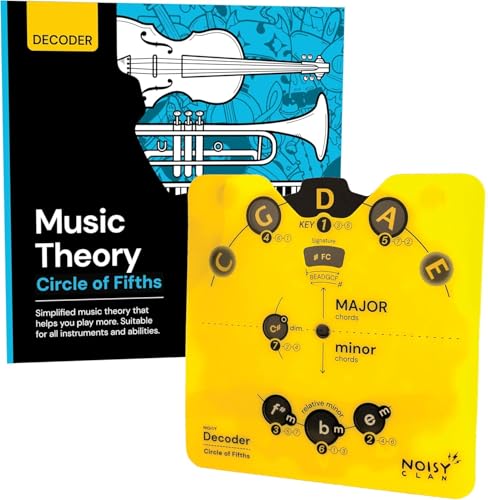
DURABLE DECODER: Made from high-quality, child-proof plastic that’s splash-proof, bend-resistant and built for everyday use. Ideal for students, teachers, songwriters and gigging musicians.
Frequently Asked Questions
What Are the Most Common Chord Progressions for Harmonization?
Q: What are some common chord progressions used for harmonization?
A: Common chord progressions include I-IV-V, ii-V-I, and vi-IV. These progressions are frequently found in popular music and can effectively enhance melodies. Tip: Experiment with each progression to see how they affect the mood of your melody.
Q: How do jazz chord progressions differ from more standard ones?
A: Jazz progressions often introduce more complexity, incorporating extended chords and substitutions. This complexity enriches the harmonic foundation and allows for deeper musical exploration. Caveat: Be cautious with intricate jazz chords, as they might overwhelm a simple melody if not balanced correctly.
How Can I Choose the Right Key for My Melody?
Q: How do I evaluate key characteristics for my melody?
A: Key characteristics include the tonal center, accidentals present, and overall sound of the key. Each key has its unique flavor which can affect the mood of the piece. Tip: Experiment with different keys to find the one that feels most natural for your melody.
Q: What mood considerations should I take into account?
A: Different keys can evoke distinct emotions; for instance, major keys often sound happy, while minor keys may seem sad. It’s essential to align the key with the intended emotional journey of your melody. Caveat: Don’t rely solely on generalizations; the context of your piece can dramatically alter emotional perceptions.
Q: How do I select the appropriate scale type for my melody?
A: Choose a scale type that complements the melody’s structure and vibe, such as major, minor, or modal scales. The scale type can help define the harmonic foundation and influence the listener’s response. Tip: Try using unconventional scales or modes to create a unique sound in your work.
Can I Use Non-Diatonic Chords in Harmonization?
Q: Can I use non-diatonic chords in harmonization?
A: Yes, incorporating non-diatonic chords can significantly enhance your harmonization. Techniques like borrowed chords from parallel keys add emotional depth and complexity to your music.
*Tip: When using non-diatonic chords, be mindful of the overall key and tonal center to maintain coherence in your piece.*
Q: How do borrowed chords affect my musical arrangements?
A: Borrowed chords can create rich emotional effects that elevate the expressiveness of a melody. They add innovation and surprise, making your arrangements more engaging.
*Tip: Experiment with different borrowed chords but ensure they serve the song’s emotional intent rather than distract from it.*
How Do I Create Variations While Harmonizing?
Q: What are some techniques to create variations while harmonizing?
A: To create variations while harmonizing, you can utilize melodic phrasing techniques, rhythmic variation strategies, and explore counterpoint methods. These approaches can enhance the harmonic structure and add richness to the musical texture.
*Tip: Experiment with each technique separately before combining them for a clearer understanding of their effects.*
Q: How do melodic phrasing techniques contribute to harmonizing?
A: Melodic phrasing techniques help shape the melody by emphasizing particular notes or contours, creating distinct musical moments. This allows the harmony to support and elevate the melody in a compelling way.
*Caveat: Ensure that the phrases remain coherent and do not disrupt the overall flow of the piece.*
Q: What role do rhythmic variations play in harmonization?
A: Rhythmic variations introduce diversity and interest to the harmonization, allowing for different interpretations of the same melodic line. It can help to create tension and release, making the music more engaging.
*Tip: Be mindful of keeping a strong pulse to avoid losing the listener’s sense of rhythm.*
Q: What is counterpoint, and how can it enhance harmonization?
A: Counterpoint involves the interplay of independent melodies, which can enrich the harmonic landscape of a piece. By contrasting and complementing the main melody, counterpoint can create a dynamic dialogue within the music.
*Caveat: Be careful with too much independence, as it may lead to dissonance that overshadows the main melody.*
What Instruments Can Be Used for Harmonization Besides Piano?
Q: What instruments can be used for harmonization besides piano?
A: Various instruments can enhance harmonization, such as guitars, strings, and vocal arrangements. Guitar harmonization techniques can provide rich textures, while string instruments can layer melodies for depth.
*Tip: Experiment with different voicings on your guitar or strings to discover unique harmonies that enhance your composition.*
Q: How can guitar be used for harmonization?
A: Guitar can be utilized for harmonization by playing chords in different voicings or adding multiple guitar tracks to create a fuller sound. Additionally, applying techniques like fingerpicking or strumming patterns can add rhythmic variety.
*Caveat: Be mindful of overcomplicating the arrangement; too many layers can clutter the sound.*
Q: What role do string instruments play in harmonization?
A: String instruments can effectively layer melodies, adding warmth and richness to the overall harmony. Using techniques like arco (bowing) or pizzicato can create contrasting textures within arrangements.
*Tip: Try blending different string instruments, like violins and cellos, to expand sonic possibilities for your harmonization.*
Q: How can vocal arrangements contribute to harmonization?
A: Vocal arrangements can greatly enhance harmonization by incorporating different vocal parts, like harmonies and counter-melodies. This approach adds emotional depth and richness to the music.
*Caveat: Ensure that vocal lines complement each other instead of conflicting; balance is key to achieving effective harmonization.*